Summary
Just over two months ago I posed the question ‘Has Covid 19 gone away? On the basis of the latest evidence the answer seems to be a no. The UK and a number of other countries appear to be witnessing a rise in Covid 19 to the highest levels seen this year, though the overall rate of infection remains low compared with recent years. The situation remains uncertain and a lack of data, particularly lack of wastewater monitoring, makes it difficult to judge how serious the situation is or might become. Most of the UK has been experiencing heatwave conditions with people spending time outdoors or in well ventilated indoor spaces, but this will change as we move into the early Autumn. It is only then that we will be able to judge the level of risk posed by a new wave of Covid 19.
What does the data show?
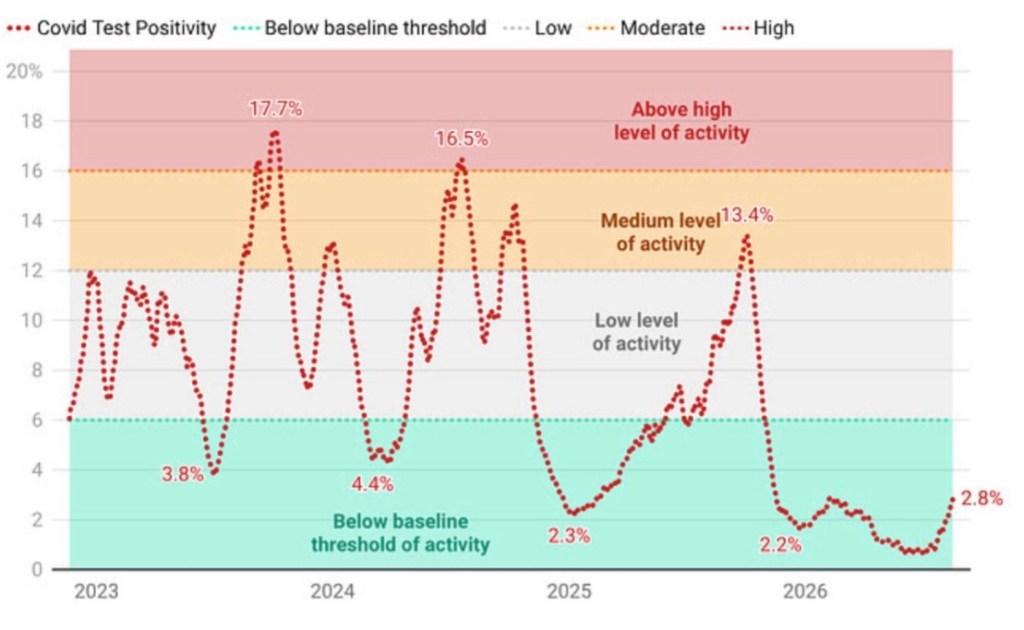
The key source available is Bob Hawkin’s latest analysis of the available hospital based data on the proportion of Covid tests that were positive for the week ending 17 August. This shows that in England, test positivity for Covid tests undertaken increased, but overall remained low and below baseline levels. At the same time all key Covid indicators in Scotland saw a slight increase, and Covid hospital admissions in Wales have once more risen. The latest report for Northern Ireland, released a week earlier showed that while Covid activity was increasing across all surveillance indicators, it still remained low.
The chart below produced by Bob Hawkins shows rates of Covid 19 positivity in England up to the week ending 17 August 2026.
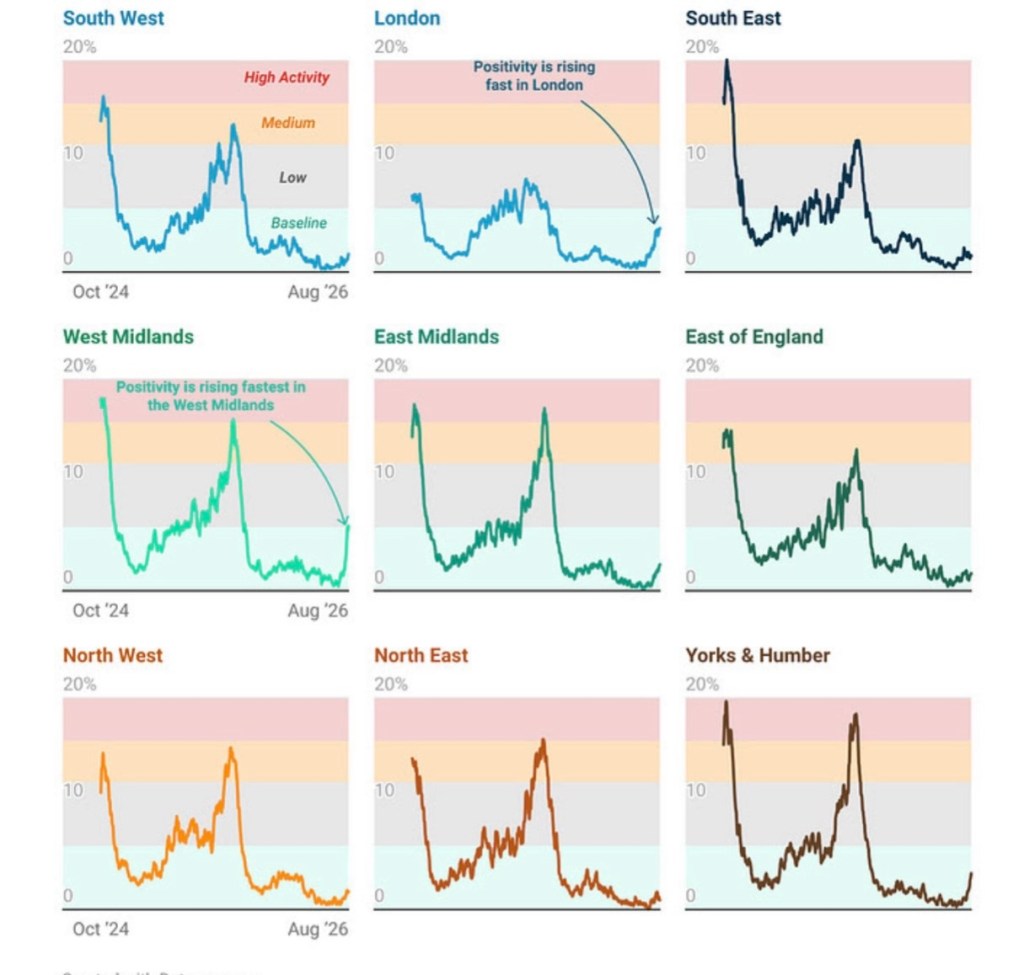
However, when we look at the data for England in more depth it is clear that the main areas of growth are London and the West Midlands with some increases in Yorkshire and Humber as well.
A similar picture emerges from Dan O’Hara’s analysis of the same data. The following map reveals significant concentrations in Exeter, parts of the West Midlands – particularly Worcestershire, North London – particularly Camden and Islington and parts of Yorkshire and Humber – particularly Doncaster, Rotherham and Sheffield.
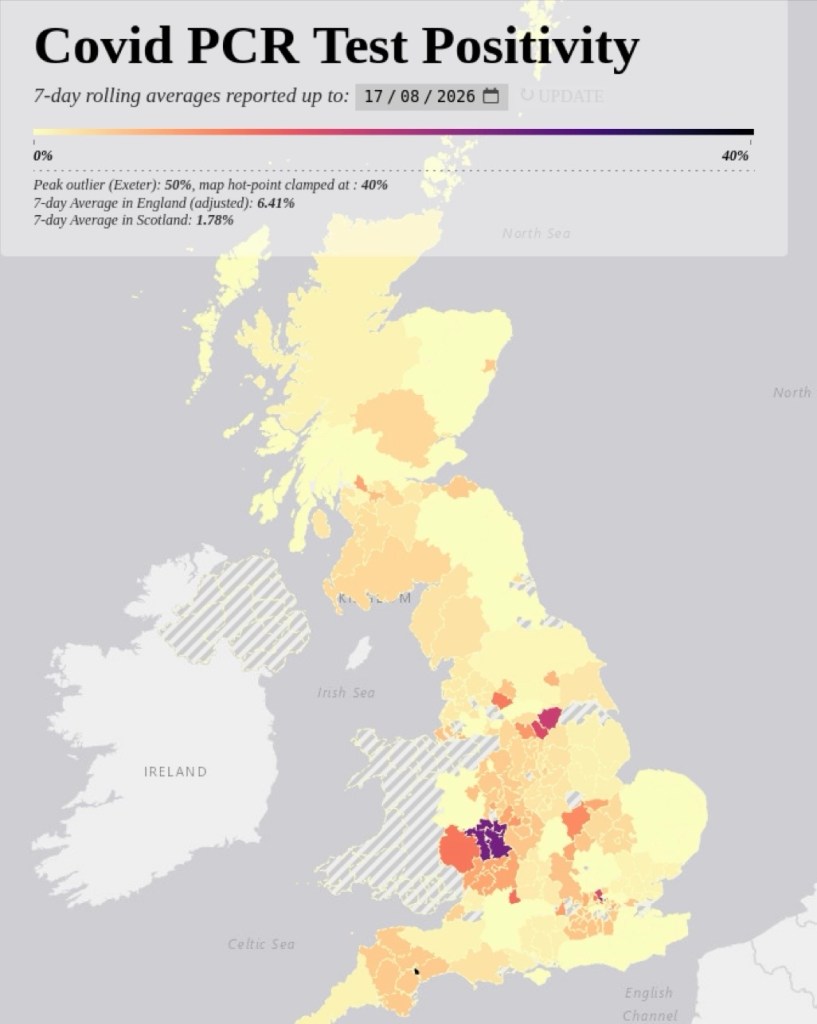
The situation in several other Western countries is broadly similar with small geographical pockets of significant Covid prevalence against a backdrop of slightly rising rates of Covid 19 from a low base. For further information see the latest paper from Bob Hawkins.
Concluding Comments
The picture presented here should not cause undue alarm at this stage, though we should remember that the data is time lagged and may not represent the current situation. We clearly need to keep an eye on how the situation develops and we should be thankful to Bob Hawkins for his continuing sterling service in making sense of what is inadequate and partial data. Nevertheless, as the weather cools and the nights draw in it might be sensible to further ramp up precautions – for tips on how to do this see, for example, my previous blog on ‘How to Avoid Catching Covid’.
Gillian Smith
23 August 2026


Leave a Reply