Summary
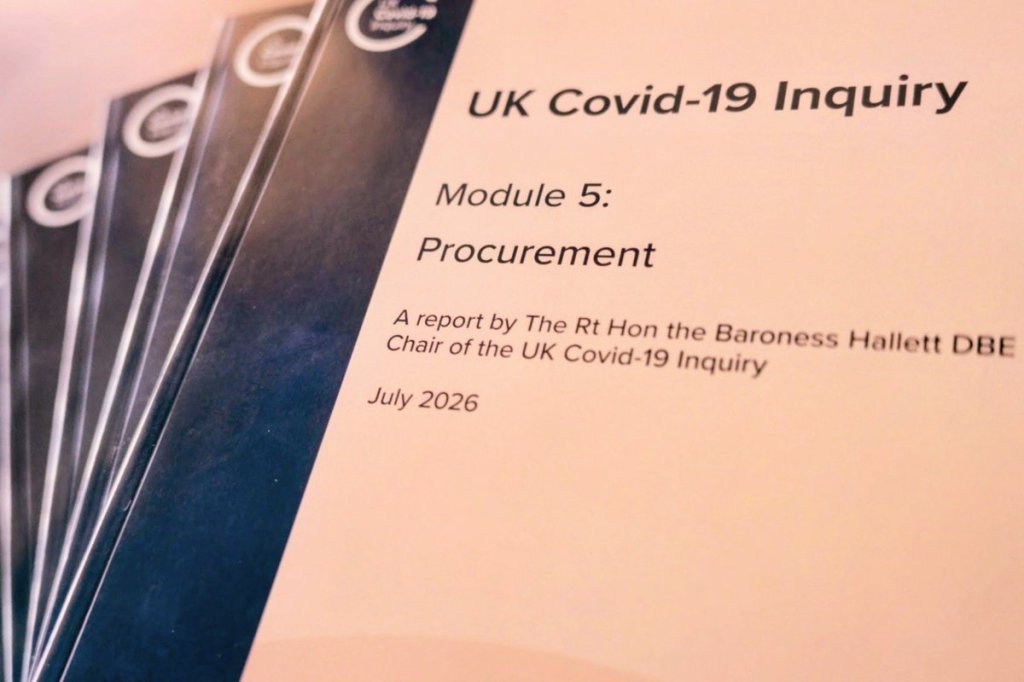
On 14 July 2026 chair of the UK Covid Inquiry, Baroness Hallett published her report of module five covering how PPE (personal protective equipment) and other essential supplies were procured during the pandemic. The report lays bare the lack of planning for a pandemic noted in other modules, with supplies of PPE found to be hopelessly inadequate and a lack of systems in place for implementing emergency procurement. The onsuing panic to procure equipment and PPE was enormously wasteful and raises huge questions around value for money and trust. Many commentators point to cronyism particularly surrounding the so called VIP lane, although the report holds back from drawing this conclusion. The consequences were that health care workers were left unprotected and many died. But it is also important to remember those impacted beyond the healthcare sector; millions of clinically vulnerable people feared attending healthcare (and other settings) due to lack of PPE and other protections, and many thousands of families lost loved ones because healthcare settings were short of equipment and PPE.
Key Findings
In the words of Baroness Hallett a key conclusion is:
‘The stockpile of PPE and other equipment for the UK was inadequate to meet demand, with the UK government and devolved administrations wholly unprepared to increase rapidly the scale and speed of their emergency procurement and distribution operations. Across the UK, had ministers and officials been better equipped with appropriate information and systems to respond, procurement decisions would have been easier and fairer. There would have been less waste, more trust and greater confidence in the system’.
Specifically she concludes:
- The pandemic stockpile of PPE was not subject to an adequate system of management and oversight.
- The organisations responsible for emergency procurement and distribution across the UK were not ready for a pandemic…..The plans that did exist had not been stress-tested in pandemic response exercises.
- The structures established by the UK government to respond to the Covid-19 pandemic did not sufficiently integrate procurement and distribution. Vital inventory, usage rates, procurement and distribution data were not easily available to procurement teams. Procurement systems were unduly complex, inefficient and unable to cope with the large quantities of information they had to process.
- Healthcare equipment is subject to a complex system of regulation, which is poorly suited to an emergency.
- There was no strategy for increasing international trade and domestic manufacturing resilience for a pandemic. The UK’s supplier base was too concentrated in a single country, China, and the capabilities of domestic manufacturers had not been adequately considered in planning.
- There was not a sufficient number of officials within the UK government and devolved administrations with the skills, expertise and experience specifically in the emergency procurement of healthcare equipment.
- There was inadequate planning for the use of external advisers and businesses in an emergency procurement and distribution response.
- Public confidence in the emergency procurement system was undermined by the lack of transparency, the lack of adequate processes to control spending and the unfairness of the High Priority Lane which tended to favour suppliers with a connection to the UK government.
- The technology and data systems for emergency procurement and distribution were outdated and did not allow adequate sharing and analysis of procurement and distribution data.
Baroness Hallett goes on to stress that it was the lack of planning that led ministers and officials to improvise quickly to establish new, untested emergency procurement and distribution systems. But the lack of plans and infrastructure meant officials could not respond with sufficient speed and efficiency to fundamental problems, such as which and how much equipment to buy, at what prices, and how it should be distributed. There were also risks of waste caused by overbuying, resulting in the loss of large sums of public money, and the buying of substandard equipment that jeopardised the safety of health and social care workers.
The following extraordinary statement appears in the report:
”The total expenditure by the UK government and devolved administrations on PPE, ventilators and testing equipment between 1 January 2020 and 28 June 2022 was approximately £42.3 billion. Of the approximately £15 billion of PPE purchased, almost £10 billion was wasted.’
Furthermore, Hallett concludes;
‘The establishment of the High Priority Lane embedded unfairness in the UK government’s emergency procurement system. It was a misguided attempt at prioritisation, caused by a fundamental lack of readiness rather than ill-intention. The High Priority Lane should not have been set up and should not be repeated.’
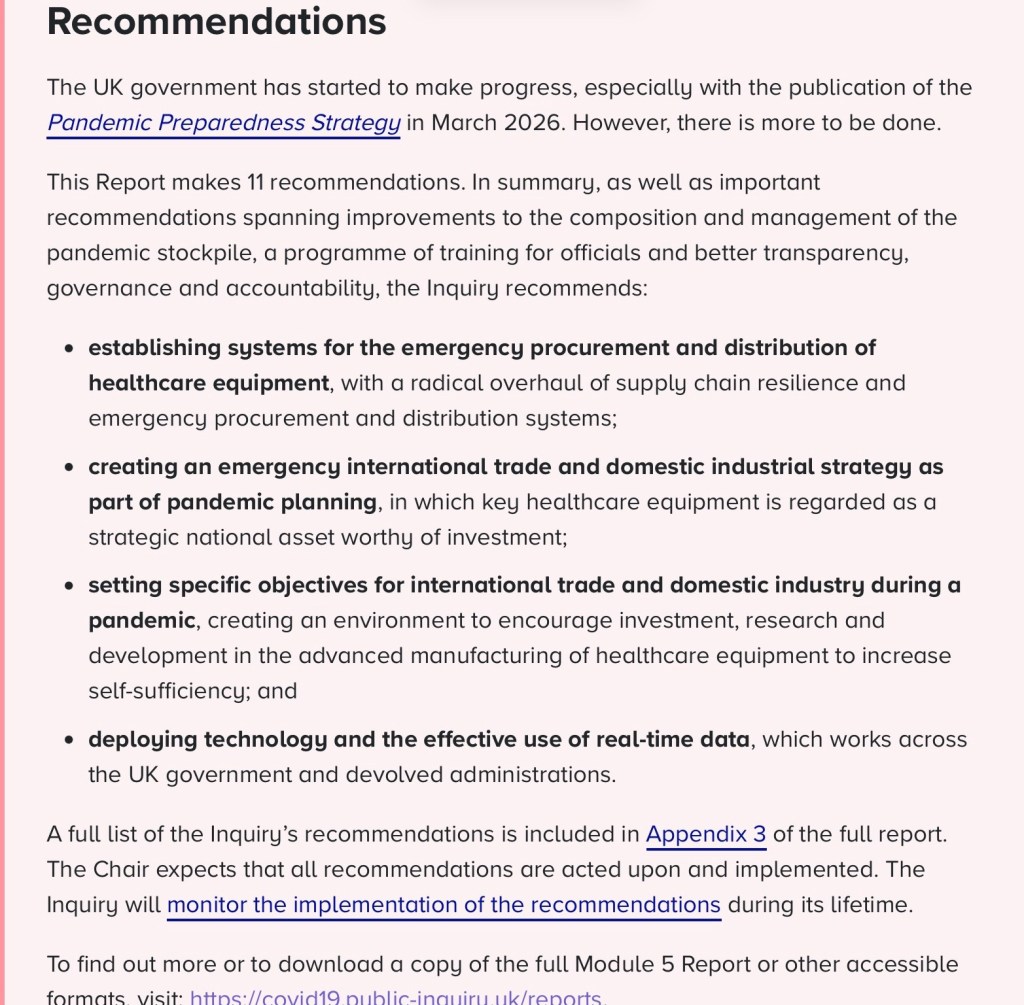
She makes the following recommendations:
It should be stressed that this ‘no ill intention’ conclusion is controversial. Indeed , there is a great deal of criticism about the amount of money that went to various former conservative politicians and donors. For example a firm c0-owned by former Tory Minister David Mellor received £164 million to supply PPE.
It is also notable that there is an entire section is missing from the report relating to PPE Medpro Ltd. because this evidence, which was heard in private, is covered by a Restriction Order due to the ongoing criminal investigations. The intention is to publish this once the Order has been lifted. This is the company co-owned by Lady Michelle Mone which was awarded £203 million in PPE contracts. Baroness Mone is also subject to investigation by the House of Lords standards committee for allegedly failing to declare an interest in the company.
Impacts
The consequences of these failures to procure PPE and equipment in a timely way are wide ranging.
The report is unequivocal that huge numbers of healthcare and social care workers were let down. They cared for patients while lacking adequate protection, often placing themselves and their own families at risk. Many died and many have been left suffering from long Covid and the traumas of the period.
There is little doubt in my assessment that the severe shortages of PPE and other equipment were behind the policies that sought to mask the truth about how Covid-19 transmits, particularly regarding whether it is an airborne virus. Had Covid-19 been designated as airborne involving aerosol transmission (rather than transmission via droplets) as it should have been, staff would have been required to wear FFP3 respirators and high level protective clothing that in reality were not available . These arguments about the false dichotomy between droplet versus aerosol transmission were well aired in module 3 of the inquiry – see my blog on module 3.
Beyond the healthcare and social care profession there were wide ranging consequences. Organisations representing bereaved families were strongly represented in this module 5 and were able to highlight the terrible toll that the shortages of adequate PPE and equipment had on their loved ones who had often been cared for by staff wearing flimsy surgical masks.
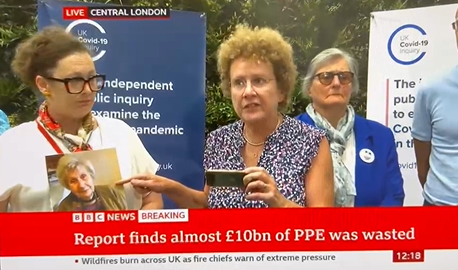
The Covid-19 Bereaved Families for Justice group issued the following statement in response to the report:
‘Today’s report lays bare a catastrophic failure of preparedness that cost lives, wasted billions and allowed a privileged few to profit from a national emergency. Those consequences were avoidable.
The human cost was felt in homes across the country, with countless patients, care users, and key workers contracting the virus due to inadequate PPE.Care workers across the country were asked to do their jobs without being given the protection they needed to save themselves. They did so without a moment’s hesitation. While ordinary people were doing the right thing, a privileged few saw a national emergency as a money-making opportunity.
The evidence in this report is clear – the VIP lane was a textbook case of corruption and cronyism. No other country in the world created a VIP Lane. It was a deliberate and shameful choice. It was a hidden route that gave anybody who knew the right people access to huge amounts of public money, with little to no oversight or transparency. The result was that a few people got richer, while PPE didn’t get to those who needed it. The VIP Lane led to PPE procurement being less effective and more expensive. Ten billion pounds, two thirds of the total spending on PPE, was wasted.
Lives were lost as a result. Yet the full extent of the PPE scandal remains hidden from public view. An entire chapter of the report remains hidden from public view until the National Crime Agency has finished its investigation into PPE Medpro. We demand the full truth and urge the NCA not to allow its investigation to drag on indefinitely.
This report must now lead to action. The current government must implement every recommendation in full, recover every pound possible and prevent political connections from ever again securing privileged access to public contracts. The next pandemic is inevitable and yet we are once again unprepared.
We welcome the report’s recommendations. The report calls on the Government to bring our PPE stockpile up to an acceptable standard within 12 months and with another pandemic potentially around the corner that is a task they must carry out with urgency. It is equally vital that we strengthen domestic manufacturing and ensure PPE fits everyone who needs it, including women, ethnic minority workers and disabled people. Had the last government prepared and listened to the warnings before 2020, many of our loved ones would still be here today.
We now call on the current government not to make the same mistakes. We will continue our campaign until every recommendation is implemented and everyone who put profit before people is held to account. We will not stop until that work is done.’
In addition, Anna – Louise Marsh Rees of Covid-19 Bereaved Families Cymru reiterates many of the points made above but adds the point about the much criticised droplet versus airborne transmission that I highlight above. Anna also adds that wasted PPE should not simply be seen in monetary terms, but also that many desperate members of staff actually wore this unsafe stuff placing themselves and others in danger .
One of the other main groups impacted are of course clinically vulnerable families. CVF was not part of module 5 but our experience deserves recognition as set out in a thread on X from head of CVF Lara Wong.
Essentially the health and lives of CV people depended heavily on being able to access healthcare, care and other services safely – something that we could not do in the absence of high quality PPE and other mitigations. But our voices were not heard in module 5 and the report focuses on the evidence that was put before this particular module of the inquiry.
Moreover, it was not just hospitals and care but also schools, workplaces and community settings. Shortages of PPE and equipment were everywhere.
The fact that CVF were not at the module 5 table means the full consequences of the lack of safety due to equipment shortages were not considered. For example, what about the huge numbers of CV people and their families who avoided attending healthcare appointments when they needed to? what about the large numbers of children who felt they could not go to school because of inadequate mitigations ?
These were/are the people whose lives depend on public health decision and we were failed.
Concluding Comments
The report sets out a horror story of failure of planning, panic and likely cronyism. The consequences were that many billions of pounds were wasted, tens of thousands of lives were lost, people could not safely access healthcare and other places they needed to get to and public trust was severely damaged.
In my judgement the report does a good job, although it does skate round areas of controversy around whether certain individuals with strong links to the Conservative Party benefited financially for supplying junk whilst the rest of us did our best and often paid the price.
Nevertheless in my view the recommendations come across as somewhat procedural and mechanistic. I am sure that this is not intentional but I think it would have been better had the reasons why they are important been woven into the phrasing – for example, ‘protecting people- including healthcare staff and clinically vulnerable people from harm should be the central focus of pandemic planning and therefore establishing systems for emergency procedure etc etc ‘
The recommendations address the need to develop optimal distribution systems and again needed to inject a sense that the purpose is to protect people. In my assessment the recommendations also need to mention the need to take account of how to target people who are particularly vulnerable to adverse outcomes. As Lara Wong states, surely ‘preparedness should be measured not only by how systems function, but by how well people are protected’.
Clearly this is the report of one module. The final report which is due next year will be an opportunity to weave together the strands from this different modules to make a convincing case about why the changes recommended need to happen urgently. It also needs to spell out the consequences of not taking action.
Gillian Smith
26 July 2026


Leave a Reply