The NHS is in the grips of another crisis due to infections, though mercifully, rates of Covid-19 infections are relatively low. Driven by flu, winter vomiting and RSV and other infections this was all entirely predictable. During the last week we have also witnessed the Chief Medical Officer warning about the impacts of infections on older people but with little meaningful advice given on how to improve the situation. And we have also seen alarming indications that the NHS is failing to learn the lessons to emerge from the Covid Inquiry about the very high death rate experienced by the UK and the need to do better in future pandemics. We briefly discuss each of these related issues in turn.
Winter Crisis
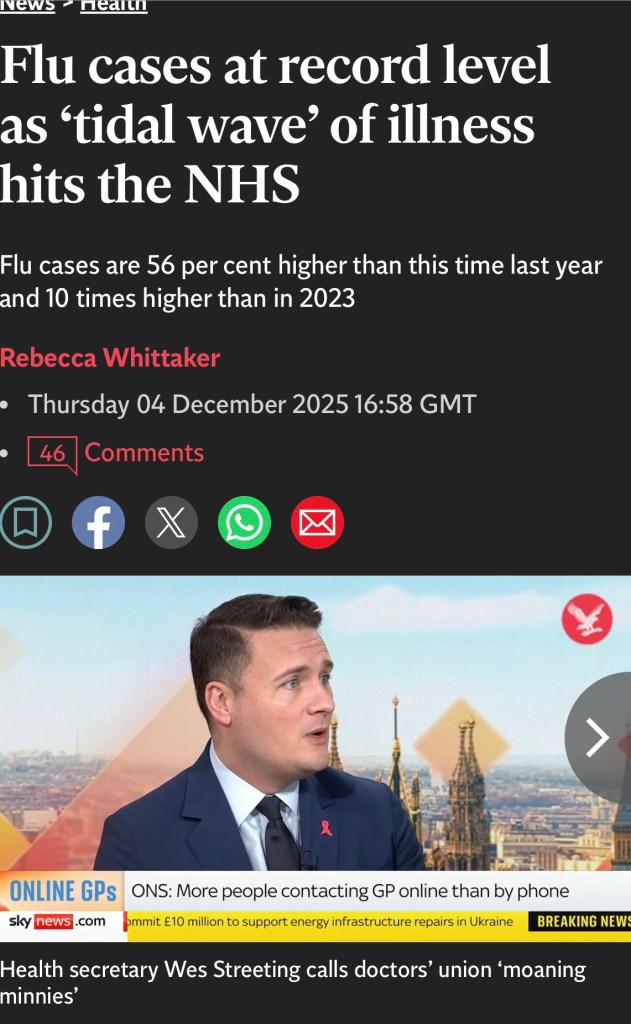
Hospital admissions with flu surged last week and there are no signs that rates of infection have peaked. This was entirely predictable as this summer saw the emergence of a new and nasty flu variant resulting in high levels of infections and illnesses across countries in the Southern Hemisphere, including Australia. We know from experience that what happens in Australia in the British summer, particularly regarding strains of and levels of flu, is usually a good indication of what could potentially hit the UK in our Autumn and Winter.
However, despite the numerous warning signs the government and NHS leaders seem to have sat on their hands over the period rather than putting in place measures to control levels of infection, for example, via giving a real push to the importance of vaccination, bringing forward the start of the vaccination season from 1 October, and extending eligibility for a free flu jab to anyone who wants one. Moreover, there seems to have been no learning from the experience of the last few years about the importance of good ventilation, the wearing of good quality masks particularly in healthcare settings, and making provision to enable people to stay home if sick.
The consequence of this failure is hospital departments being overrun and corridor care where patients are dumped with little care or dignity is becoming increasingly common again. Meanwhile schools across the country are reporting huge levels of absence with the knock on loss of learning. Businesses across the country are being heavily impacted. And at the same time care homes are pleading with people who are ill not to visit elderly relatives and spread infections across the care home sector once again.
Protecting Older People?
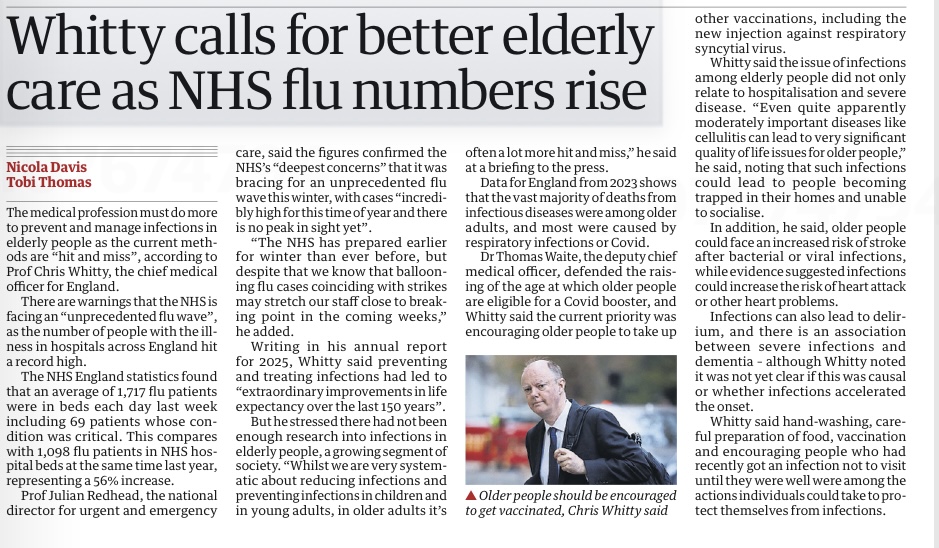
The Guardian and many other news outlets last week reported on a statement made by Chief Medical Officer, Sir Chris Whitty in which he said that not enough is being enough to prevent infections – particularly respiratory infections and Covid – amongst elderly people. The majority of deaths from infections occur among older people and infections are also known to cause a range of other health conditions including strokes and heart attacks which in term impact on the quality of life of elderly people. This is all excellent stuff.
It is only when Whitty moves to talking about the solutions that the statement goes rapidly downhill. He says the means of preventing infections are handwashing, care in preparation of food, vaccination and staying home. Whilst vaccination is important and some of the other measures are is partially helpful for some illnesses – particularly winter vomiting bug (which is also airborne), overall it is as though the pandemic and Covid never happened. In particular there is no mention of the critical importance of wearing good quality masks and maintaining good levels of ventilation and air filtration. This is a major lost opportunity to ram home the message.
Planning for Future Pandemics?
Last week also saw a letter drop on the desk of the chair of the UK Covid Inquiry – Lady Hallett. The letter from the Covid Airborne Transmission Alliance CATA is captured in the following thread from Lara Wong of the Clinically Vulnerable Families group. It highlights a disconnect between Hallett’s module 1 recommendation that:
“risk assessment that moves away… reasonable worst-case scenarios towards… a wider range of scenarios”
And a statement made by NHS England in a pandemic planning document published after the relevant Covid Inquiry hearings which says that:
‘it will not be possible to halt the spread of a new pandemic virus, and it would be a waste of public health resources and capacity to attempt to do so’.
In other words it assumes mass infection is inevitable and acceptable but for some people it isn’t survivable. This is despite all of the evidence from other countries, particularly those in the far East that managed to get through the pandemic with a tiny fraction of the deaths experienced in the UK and with far less disruption to their economies and societies.
The CATA letter then goes on to point out that Baroness Hallett has already said clearly:
Covid is an airborne disease. Her experts backed this up again and again.
Yet DHSC (Dept of Health and Social Care) and infection control manuals are *still* clinging to droplet/contact myths. And as the CATA letter points out:
Guidance still uses the incorrect 5 micron cut-off between “droplets” and “aerosols” that inquiry experts have said is wrong.
This means that fluid-resistant surgical masks are still incorrectly being used as Covid / airborne protection in healthcare settings. And although CATA does say it, it’s where the idea that hand washing can protect against airborne viruses comes from.
CATA say this situation goes as far as being unlawful under Health & Safety law and the COSHH regulations. In their words:
The science is clear
The law is clear
But the guidance isn’t
…and workers and patients being left to face the consequences.’
Concluding Comments
It seems incredible that no progress whatsoever has been made in learning the lessons from the pandemic and rolling out both short and long term policies that would bring about a measurable reduction in the levels of infection, ease pressures on the NHS and reduce levels of misery and illness amongst patients and their families now and in the future.
It was only last Christmas that former NHS regional director Roy Lilley appeared on Sky news in an attempt to get the blindingly obvious solutions across. Yet here we are again.
To recap. Firsly, there is a continuing failure to recognise the importance of ventilation and good quality masks in preventing the spread of viruses most of which spread through the air. The continuing focus on handwashing seems incredible given all that has been said and written over the last six years or so.
Secondly, vaccination policies are based on the idea that people are isolated individuals and they fail to recognise how viruses actually spread, including to vulnerable people. In the following clip Lilley talks about how many people in their 50’s and 60’s will have elderly relatives. Yet this is now a largely unvaccinated cohort of people who risk spreading the virus to the vulnerable and across care homes. This point was reiterated last week by one of the leading providers of care homes in the UK.
I despair about what is actually going to change this mentality at the centre of government and bring about meaningful protections that would be good for clinically vulnerable people and their families, good for the economy and good for society. It is arguable that our best hope is that a sensible plan for handling future pandemics emerges as a result of the Covid inquiry which could act as a springboard for implementing changes that would bring short term benefits over and above long term pandemic planning.
However, this would require radical change in the assumptions and mentalities evident in Department of health and senior NHS establishment thinking. It is notable that DHSC Pandemic Preparedness Strategy is now late, and there’s still no UK-wide Pandemic Respiratory Disease Response Plan. Exercise Pegasus took place in the summer holidays, mainly with senior leaders. It lacked transparency in the absence of stakeholders and experts. It will be necessary to push for this as we enter the new year. The next module report from the Covid Inquiry on Healthcare systems is due in the spring and its content and the official response to it will be critical in bringing about much needed changes.
Gillian Smith
7 December 2025

 Living on Plague Island
Leave a comment