The eighth module of the Inquiry is set to begin hearing evidence on 29 September 2025. This is an important module which will consider the impacts of the pandemic on children and YP and seek to ensure their voices are heard in planning for future pandemics. There are a number of core participants including the Department for Education, Office of Qualifications and Examinations regulation, Office of the Children’s Commissioner England, Long Covid Kids and Long Covid Kids Scotland, Save the Children and other charities, and, very importantly the clinically vulnerable families group. This short blog sets out the issues.
Scope of Module Eight
According to the Inquiry website this module will consider the following topics:
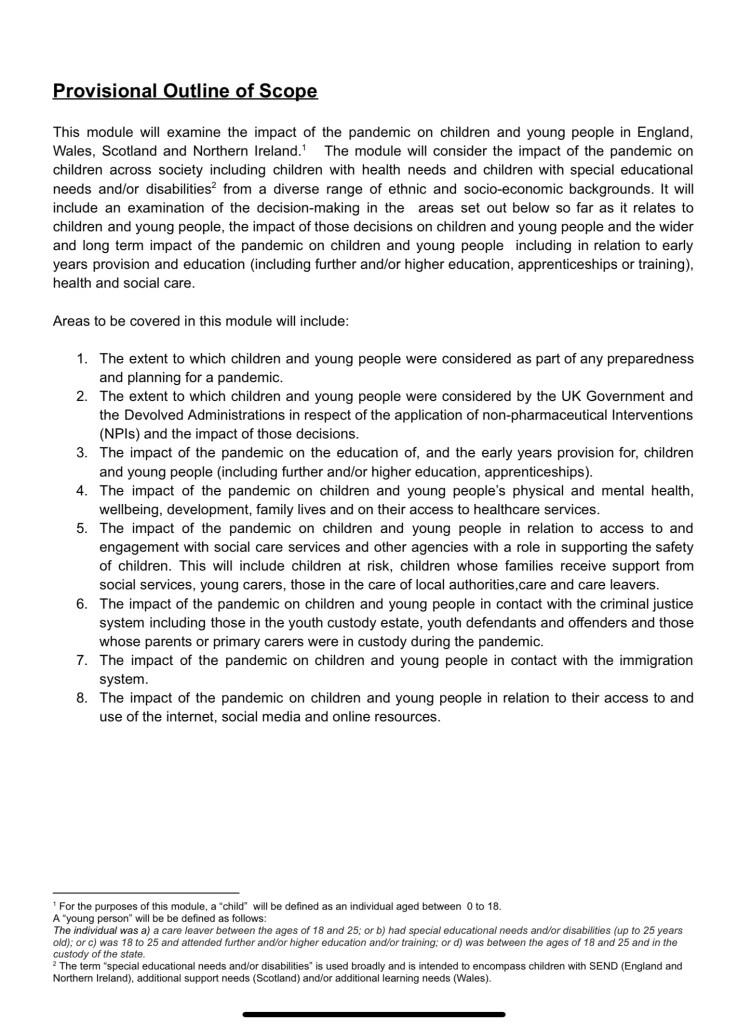
Clearly a number of areas of contention are going to emerge throughout the hearings, central to which will be the decisions made to close schools and other facilities, educational provision during closures, timing and handling of reopening, exams, and the subsequent period after so called ‘freedom day’ with the emphasis on in person attendance at school.
It is likely that some witnesses will make statements along the lines of ‘closures bad’ ‘should have been avoided at all costs because of the damage done to children.
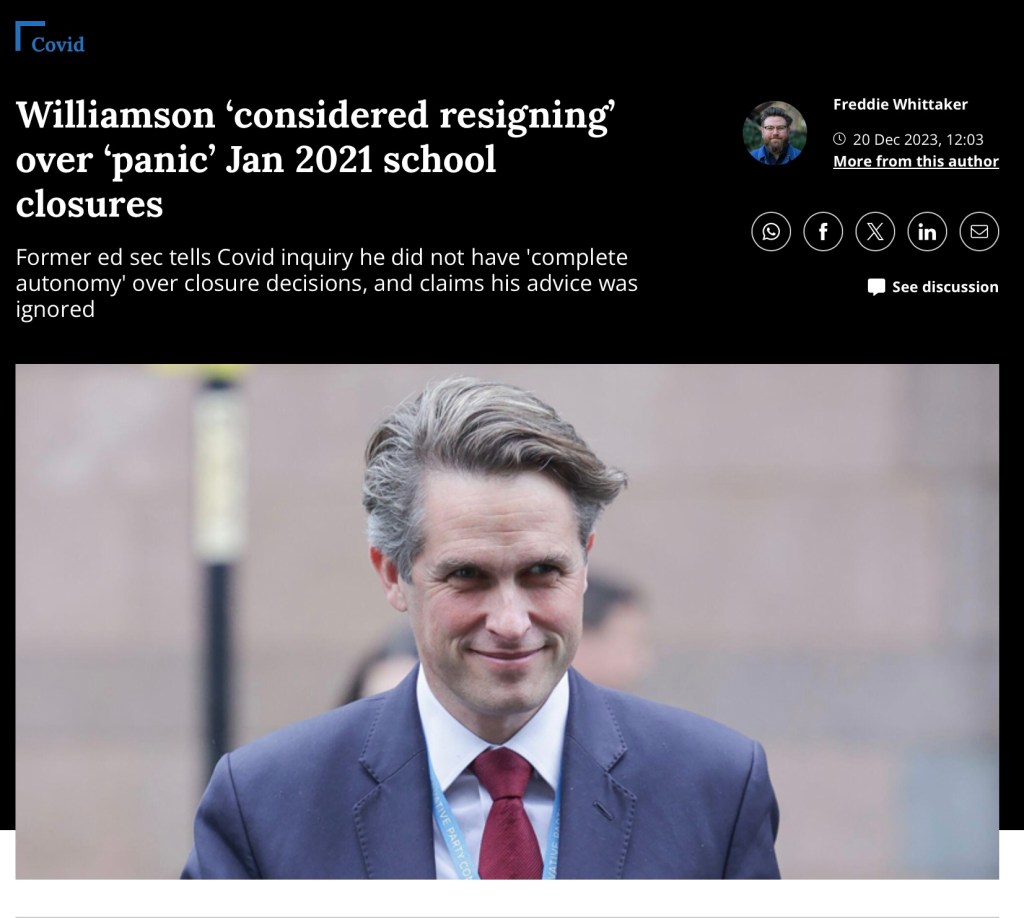
It is hoped that the inquiry will take a more nuanced approach and consider the ‘how’ questions, taking into account the failure to make schools safe, the diversity of experience across different types of children, including disabled children, children at risk of harm/ in care or living in households full of conflict, ethnic minority children, children living in unfit crowded homes or /and in poverty with lack of digital access and children who were bereaved during the pandemic. Very importantly the inquiry will hear from/about children who are themselves clinically vulnerable, and also children who live in households containing people who were/are clinically vulnerable and at increased risk from the virus. The safety of schools reopening is likely to be a central issue for this group, and also for the long covid groups and the TUC.
There are reasons to be optimistic about this module as the Inquiry published a research report Children and Young People’s voices on 15 September which in my assessment captures the diversity of experiences very well and is brought to life by a series of quotes from children and young people themselves.
Clinically Vulnerable Children and Children living in CV households
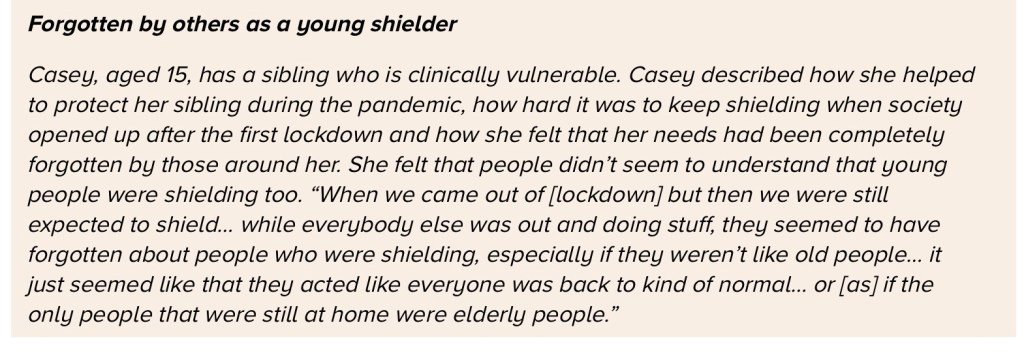
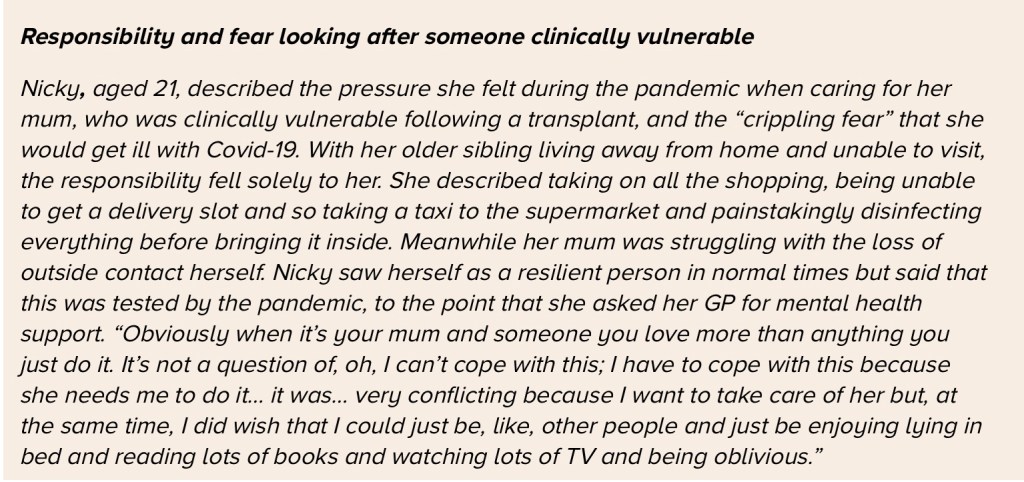
The Children and Young people’s report referred to above captures the range of experiences of a number of children impacted by clinical vulnerability including issues around isolation and stress ‘fear of killing mum’, bullying post re-opening, fines for non school attendance and enforced off-rolling from the school register – no doubt aimed at making attendance figures look good – but essentially leaving CV families to their own devices to provide education for their children. For example:
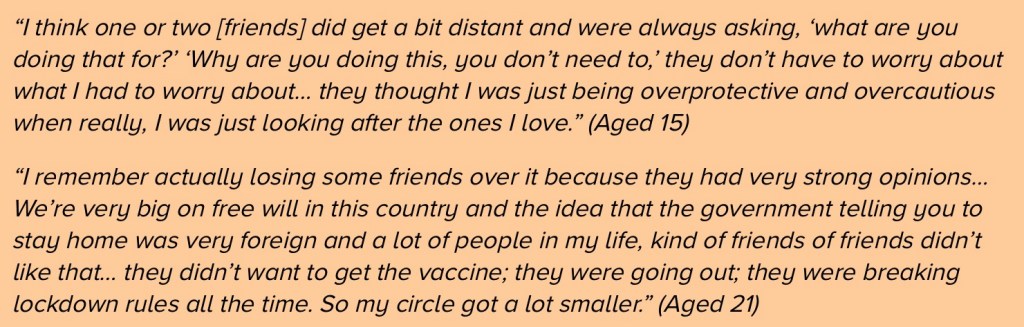
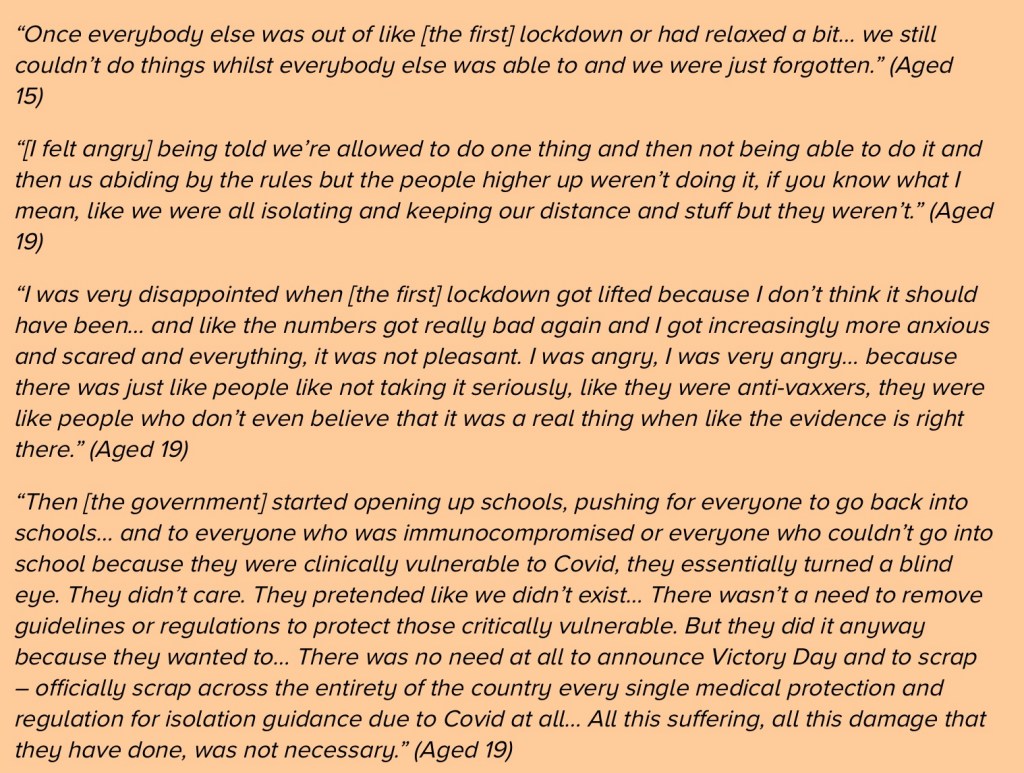
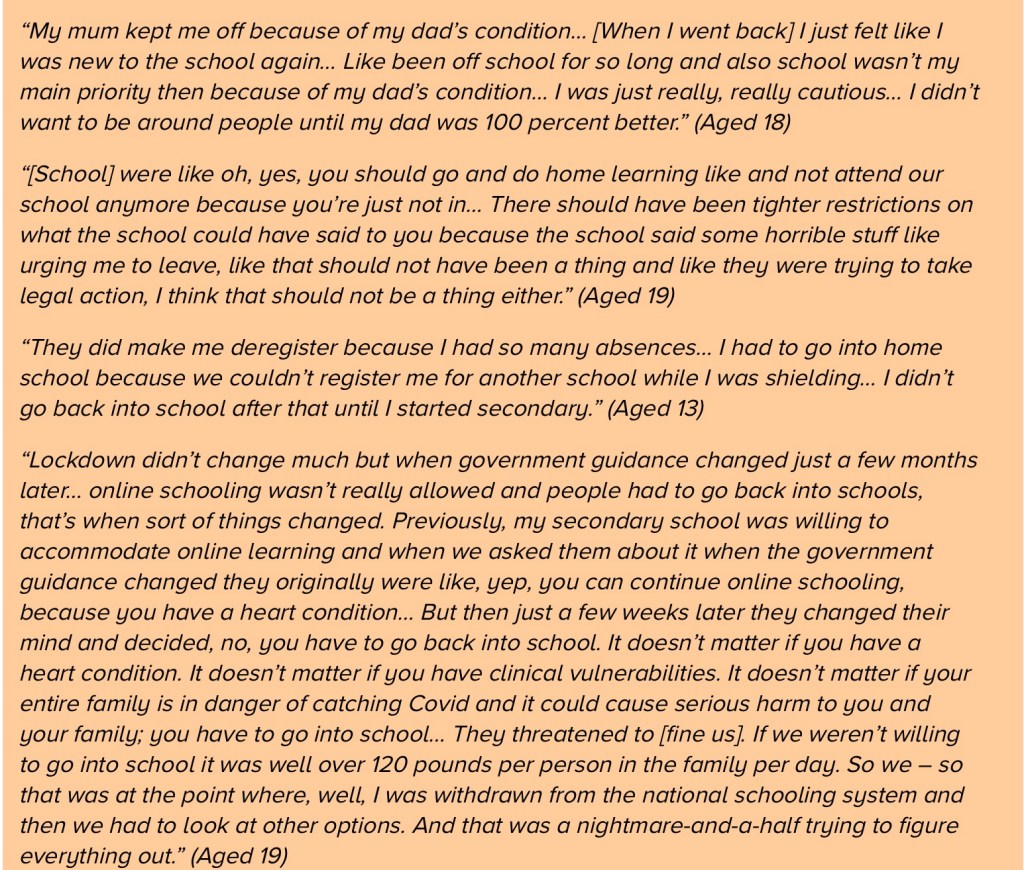
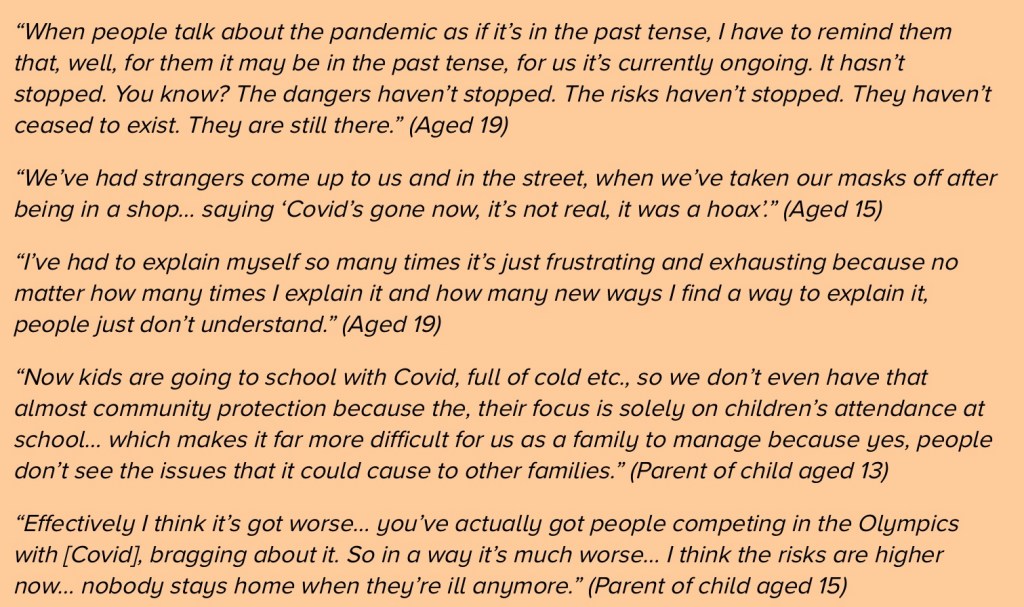
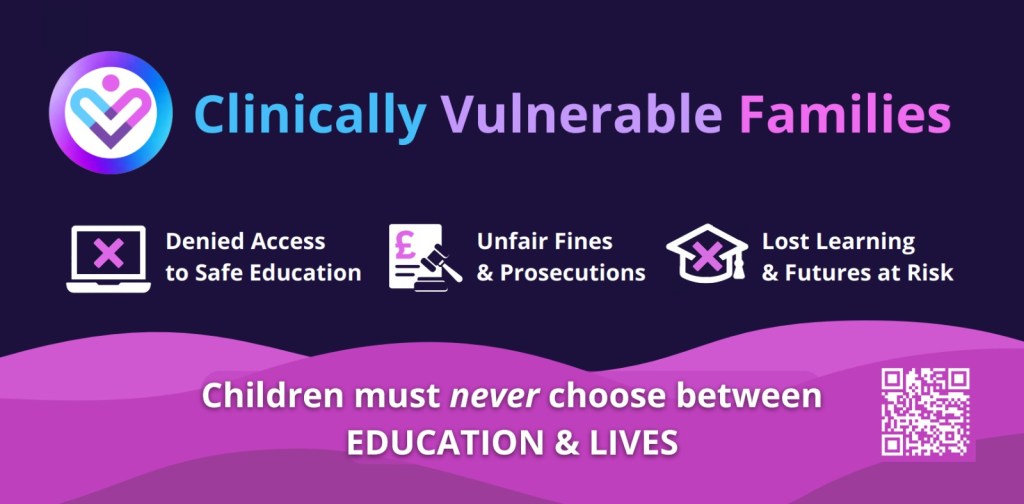
Head of CVF Lara Wong picks up these points in her excellent blog post published on 20 September. The key goals that the CVF group want to achieve from this module of the inquiry are well captured in the following caption from Lara’s blog.
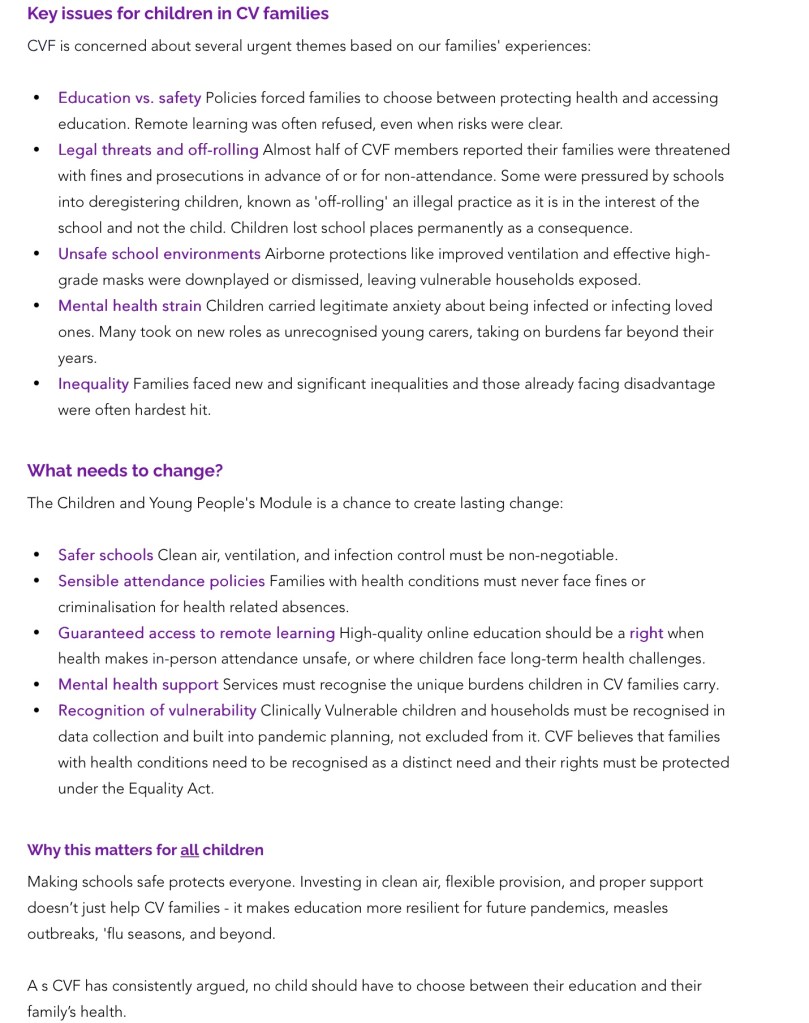
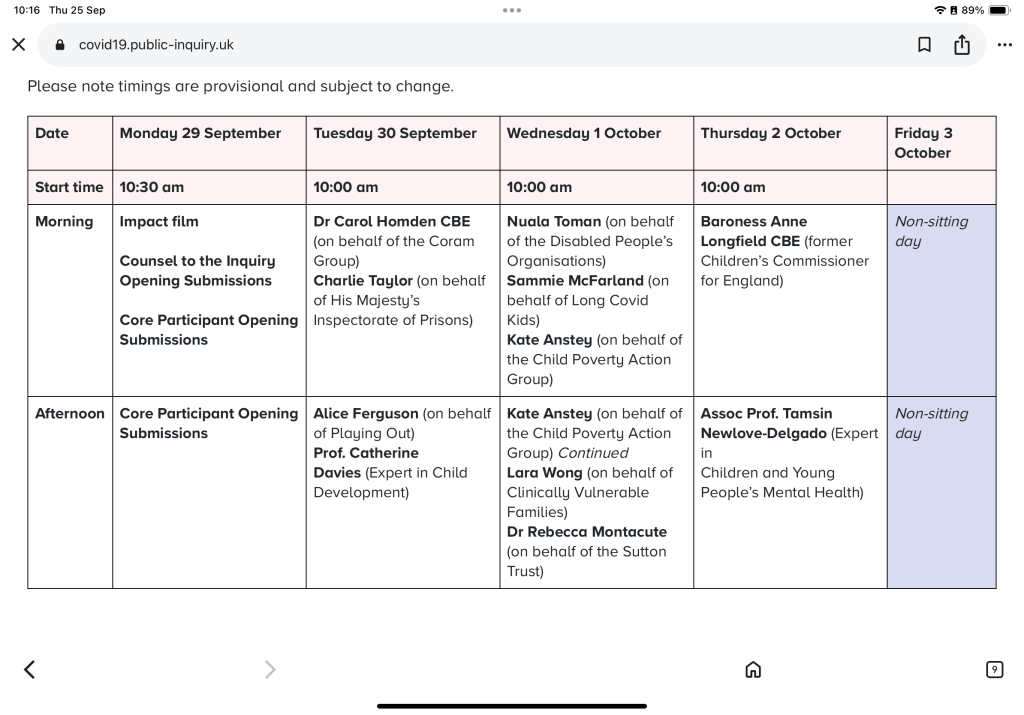
Lara Wong has been called to appear before the Covid Inquiry on the afternoon of 1 October 2025 in order to explain the extensive evidence report submitted by CVF. Good luck Lara!
Concluding Comments
In sum this is a very important module with real potential to address some of the mistakes made over the years of the pandemic and to move away from simplistic solutions and attitudes such as ‘opening schools good, precautions bad’. This is not just something for the future because the bullying of children from CV households for wearing masks and compulsory off rolling is still happening as I write this blog.
It is obvious to me and to many others that there is a third way that recognises the diversity of experience of children depending on their circumstances.
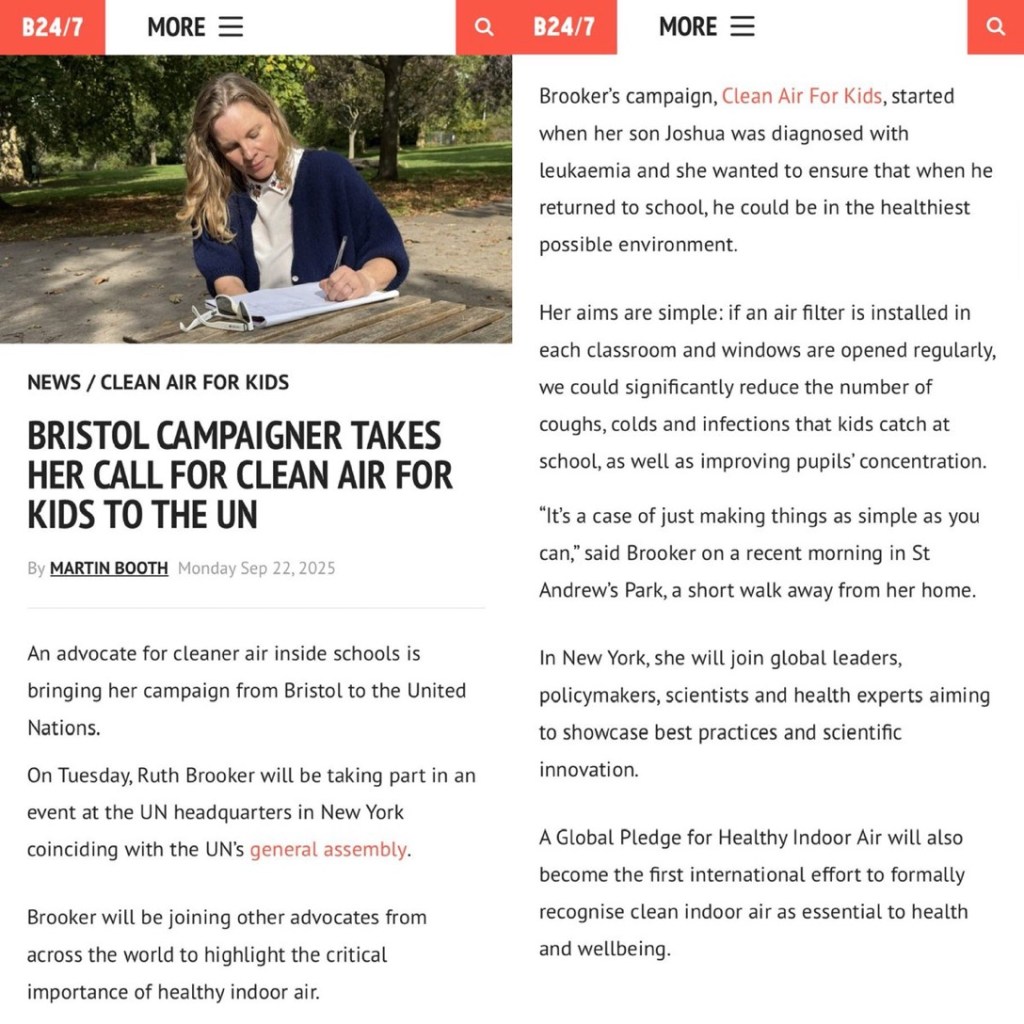
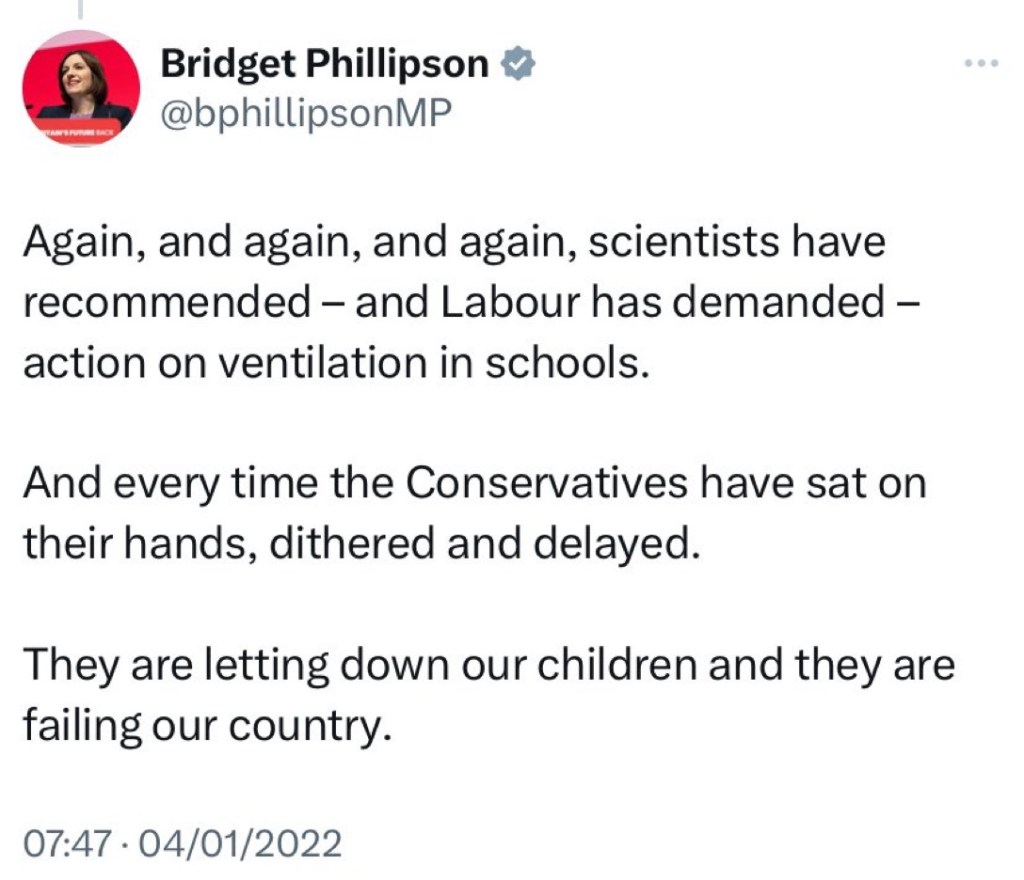
What seems to be missing from the entire debate, which needs to be brought to the fore by the Inquiry with the help of the core participants and witnesses, is the importance of ventilation – see numerous blog posts on this website including How to Avoid Catching Covid and the Truth about Covid 19. We have a wealth of evidence on the importance of good ventilation in tackling airborne viruses, and reducing absence rates from schools. This was a central theme of a UN Conference timed to coincide with the General Assembly which was held recently. Delegates included Ruth Brooker from the UK – see clip below.
Despite all of this, most of our politicians continue to appear to ignore this, including the current Secretary of State for Education who seems to have forgotten the numerous statements she made whilst in opposition.
Finally a plea. The CVF group are unfunded and we urgently need funds in order to make the most of module 8 as well as supporting other work. Please consider donating via the following link. Thank you.
Gillian Smith
22 September 2025
Please note : Although I am a volunteer for the Clinically Vulnerable Families group, the information presented here and any views expressed are my own.

 Living on Plague Island
Leave a comment