
Yes, we have known for years that Covid-19 is airborne (SARsCoV2) and indeed, individual officials from the World Health Organisation (WHO) have been admitting it for years. Yet a powerful body within the WHO has clung onto their original line that it is transmitted by droplets. This all changed on 28 March when the WHO released a article clearly stating that is airborne. This is of course important and may prove to be a watershed moment because it has fundamental implications for how to mitigate the spread of the SARS-CoV2 virus and shows a great deal of the UK’s approach – wash your hands, wear a paper mask and so on to be nonsense.
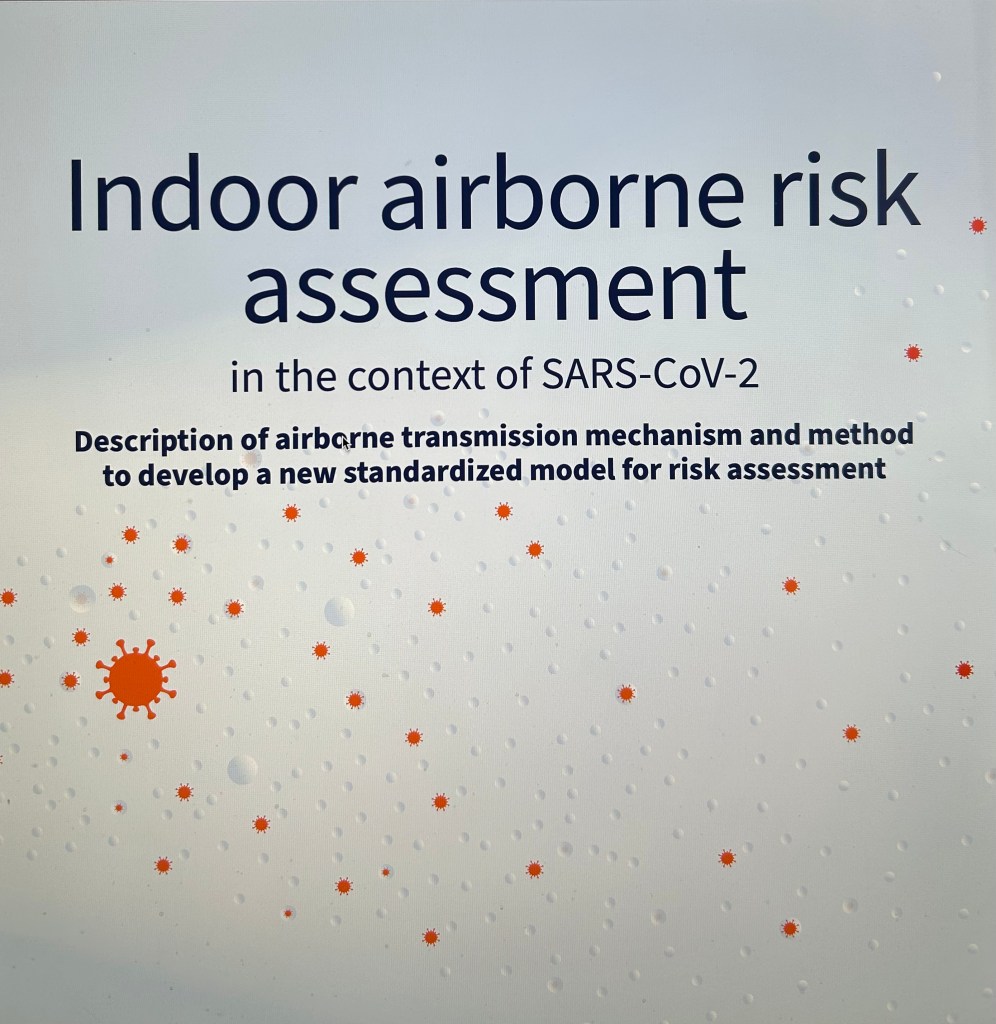
The intensively researched WHO article contains the following phrase in the summary:
‘Long-range’ transmission can occur in enclosed settings when infectious particles accumulate over time in a given volume, where the concentration of virions is sufficient enough to cause infection once infectious particles are inhaled by a susceptible host.
A means of quantifying the risk of SARS-CoV-2 airborne transmission in a standardized manner (using a standardized model) in residential, public and health care settings is essential to inform non-pharmaceutical risk reduction measures, such as increasing ventilation, air cleaning and disinfection, source control interventions, and controlling the occupancy, as well as to communicate the risk and enable informed decisions by the occupants.
See reference above
This confirms everything we have been talking about for years and has vindicated the UK scientists from ‘Independent Sage’.
The fundamental implication is surely that it now needs to be recognised that mitigations to contain the spread of Covid cannot be left up to individuals. Action is needed at the national (and international level).
In other words it implies that measures such as ventilation, air filtration in schools, hospitals, public and private buildings are vital to contain the spread of Covid-19. Many other countries have recognised this for years and are on the way to improving public buildings. And private businesses are increasingly learning that cleaning the air is good for business as their populations expect to see screens advertising the air quality in places such as hotels and restaurants.
As far as individual homes and small businesses are concerned, this confirms everything in my blog on Avoiding Covid as it is all based on the theory that Covid-19 is airborne. Measures such as HEPA filters, improving ventilation, good quality FFP2/3 masks, avoiding large gatherings, gathering outside, significant social distancing and similar are all designed to address the threat of an airborne virus that hangs in the air like cigarette smoke.
Way forward
Of course, the UK government will not acknowledge the new WHO statement and very few media outlets are likely to communicate it to the public. Yet we know that the Royal Family understand how to the virus is spread because a HEPA filter is always visible in photos of the Kings meetings and they are openly protecting him from large gatherings this Easter.
Unfortunately ordinary people are not afforded these privileges. Cancer patients are expected to crowd into waiting rooms with no mitigations and receive treatments, including chemo, in unventilated settings where no one is wearing a mask.
This new WHO statement provides a glimmer of hope. It won’t be easy but the truth is that it provides a basis for renewed and invigorated campaigning for change. For example, Cath Noakes of the University of Leeds in conjunction with 40 scientists from around the world is calling for indoor air quality standards to be introduced around the globe.
This should be helped by statistics showing an alarming rise in rates of Long Covid in the USA. Data up to 4 March it is estimated that 29% of adults were suffering from Long Covid.
Surely, people are going to begin to ask themselves how long this can carry on for without action to mitigate the spread of Covid-19 when the means of achieving this are within reach.
Happy Easter ….


 Living on Plague Island
Leave a comment