
The recent mini TV series ‘Breathtaking’ has sparked renewed interest across most of the media in the pandemic and some commentators, including the author of the book that the series is based on have raised questions about the effectiveness of current policies in protecting staff from Covid. A recent demonstration outside St Thomas’ Hospital, London organised by nine different organisations sought to highlight the issues in our hospitals currently. This has received quite extensive coverage across the London press and has even hit the Eastleigh Times. And a Westminster doctor has warned that the government is risking lives of patients and staff with inadequate infection control policies..
The pressure increased further on 26 February when the Royal College of Emergency Medicine published the results of a three year study showing that infection control standards in A and E departments – vital for containing the spread of infectious diseases – have fallen significantly.
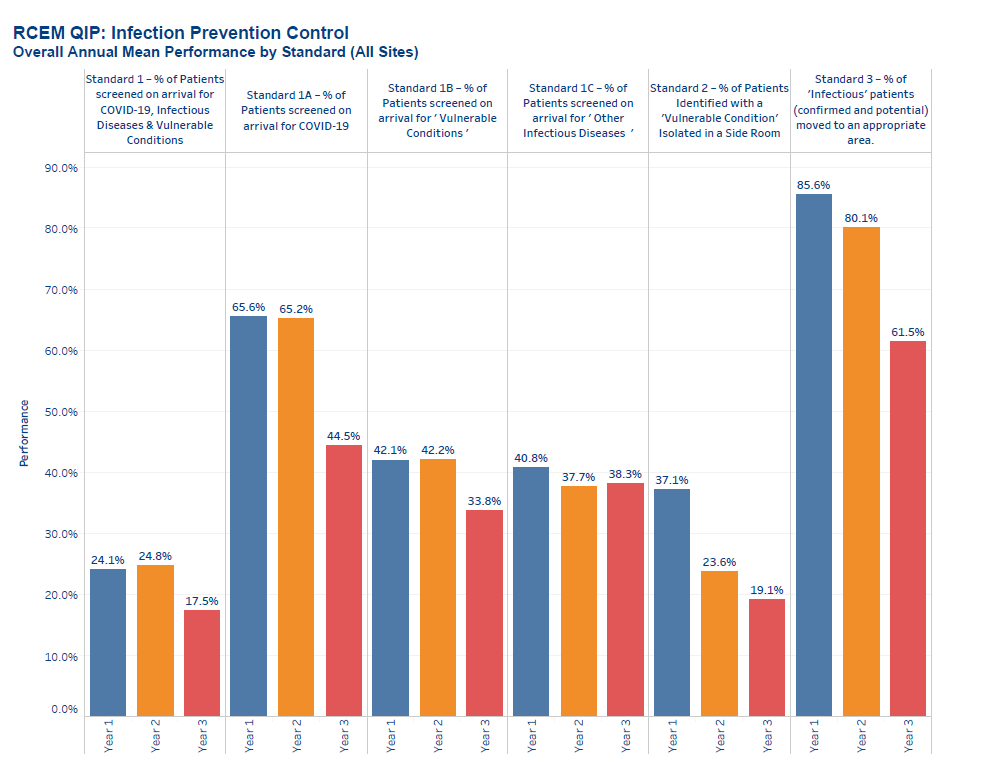
The following section summarises what they say about clinically vulnerable patients.

Summary of why is it important to control the spread of Covid and other infections?
- It is estimated that over half of all Covid-19 infections are caught in hospitals and other healthcare settings – it is important to improve safety for the benefit of both patients and staff.
- Covid is mutating at an alarming rate and we should not assume it will become less serious over time. But preventing the spread of infections by clean air and isolating infectious patients from others would provide fewer opportunities for the virus to develop in dangerous ways and make us better able to tackle new infections in future.
- It’s unsustainable to keep catching Covid infections. An infection can cause blood clots and blood vessel damage and a range of over problems. In fact an estimated ‘1 in 10 infections leads to long term symptoms and it is becoming increasingly clear that the more infections you get the greater the chance of developing Long Covid because Covid has been found to damage the immune system.
- it’s important for healthcare workers to keep well given the importance of the jobs they do but also for their long term wellbeing and to help them to start to recover from the turbulence and horrible stresses of the last few years.
- Clinically vulnerable people need to be able to access healthcare safely – they depend on it and make up a disproportionate number of people in hospitals and healthcare. It’s a big problem if they are exposed to Covid because they often have weak immune systems which make it difficult to fight off infections. If they get infected they will place a big burden on healthcare services and we will never get out of the never ending cycle of emergency pressures.
- It’s important not to forget their carers and household members because if they become infected they could pass it on to the clinically vulnerable person in their household as well as becoming less able to look after anyone and hence placing more burden on health and social care.
- It’s also bad for the economy to keep losing workers to sickness, including long term sickness. This is now showing up clearly in official statistics. More public spending on things like health and social care depends on a healthy economy…
What can be done?
- We all know that vaccines have not proved to be the magic potion they many expected them to be in 2021. You can still get infected or develop Long Covid if you are fully vaccinated, though vaccines do help reduce this to some extent and usually prevent you getting very sick from the initial infection. And the number of people who are entitled to free vaccine is going down all the time.
- Masks are also a good way of stopping the spread of infection but we know it is probably not sustainable to keep wearing them for ever. They are nevertheless, an important defence whilst long term solutions are implemented.
- This is why clean air is a key part of the fight against Covid-19 and other infections.
- Covid-19 has been found to hang about in the air for hours – rather like cigarette smoke. This means that measures like washing surfaces, washing your hands, important as they are for other reasons, will not stop you catching Covid-19.
- We need clean air. CO2 monitors are a good proxy for how clean the air is. The diagram below shows that your chances of rebreathing in someone else’s infected breath are greatly reduced if CO2 levels are keep low – ideally below 800

- getting CO2 levels down can often be achieved by opening the windows and doors and getting a draft through which is well worth doing if you can. The problem is that windows in modern buildings do not always open or floors are so big that many areas will not get any fresh air from an open window. Getting ventilation through also depends on atmospheric conditions and there is also the problem that they let in the cold or outdoor pollution.
- This is where filtering the air to make it clean is important. The technology exists to clean air via built in HEPA filtration. A few HQ buildings in London already have this and experts say/we think this should be standard in all new public buildings, including healthcare settings and in add on refurbishment to build in filtration. This is a key medium term goal
- but the good news it is possible to achieve significant progress in the short term via plug in HEPA filters. Experiments carried out in real world settings show that these work in eliminating Covid-19 and other viruses in the air. It is important to have the right number of filters for the air space that needs cleaning and to position them in the spots where they are most likely to be effective but this is not difficult. And the good news is they are cheap, particularly when balanced against the cost of healthcare staff getting sick and the costs of treating patients for longer because they develop Covid when attending healthcare.

 Living on Plague Island
Leave a comment