Summary
What is Long Covid? What causes it? What are the implications for the lives of sufferers and policy implications more generally? Are some people more likely to get it? Public Attitudes to sufferers? How extensive is it? Is there are cure? This blog summarises the key issues, spells out the policy implications and, in the concluding comments, offers advice to sufferers.
Introduction
The death of Derek Draper, announced last Friday, marked the end of his very long struggle against the impacts of a Covid infection acquired in March 2020. The story has been so prominent because Derek was married to TV presenter Kate Garraway who documented the struggles of both Derek and also herself in trying to care for him over a long period of time. However, whilst the story has brought the issue of Long Covid to the fore, it has tended to be presented as something in the past or according to the Sunday Times on 7 January as ‘during the pandemic’, not as the current live issue that it is. This blog discusses some of the issues.

Derek Draper was of course semi famous in his own right and as explained in the Guardian obituary, rose to prominence in the 1990s as a political advisor and lobbyist strongly supportive of the New Labour cause and is credited with playing a key role in the election of the New Labour government under Tony Blair in 1997. Unfortunately his downfall came in 1998 after a scandal due to him over boosting about the amount of influence he had. He claims that he was merely touting for business for his lobbying firm, but he was cast out into the cold by figures in New Labour. Whilst others might have avoided being pushed this was not the case with Derek, possibly because of his background and somewhat maverick style.
I have taken an active interest in his story, particularly after he contracted Covid, as I was brought up in the same small Lancashire town and went to the same secondary school. In fact he is the only person I have heard of who attended Southlands High School, Chorley who went on to become remotely famous!
He was at the serious end of the spectrum in terms of damage inflicted by Covid and was in hospital for over one year. Almost every part of his body was damaged, including the kidneys and liver, heart and brain. He required round the clock care after his discharge and never recovered very much.
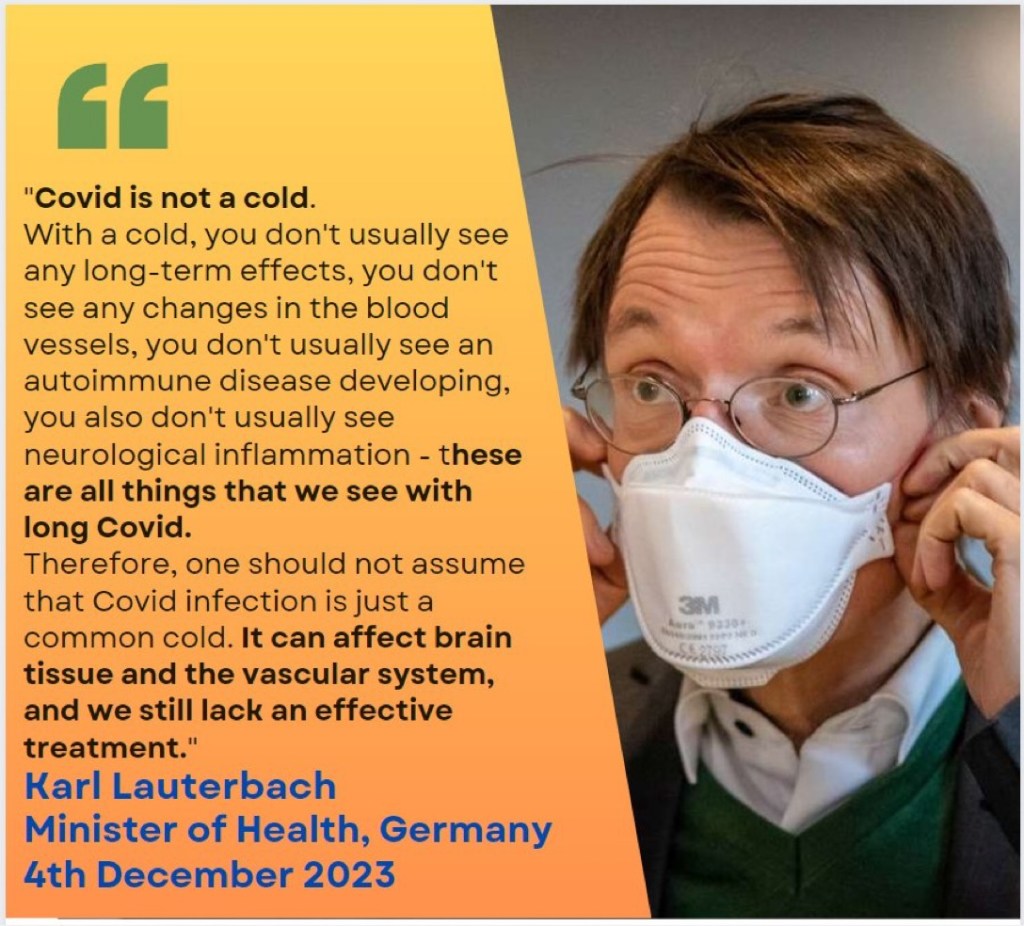
Whilst Derek’s story is a salutary lesson on the impacts of Covid on the body there is a danger that, echoing press stories, people will regard it as a particularly serious example, as something in the past and that Covid is now mild and just a cold or that vaccines or immunity protect them from Long Covid.
Of course, this is not true. Covid infections during the supposedly mild omicron era resulted in more cases of LC than the earlier period mainly because omicron spreads more easily and has infected more people. Given that the JN.1 variant that is currently sweeping the world is even more transmissible and there are significant worries how it will mutate over time, Long Covid is a very long way from being something that was in the past.This is recognised by some media outlets in Britain such as the Daily Mirror but the majority prefer to bury their heads in the sand.
The World Health Organisation is certainly worried (WHO) about Long Covid in the context of governments increasing reluctance to limit the spread of Covid.
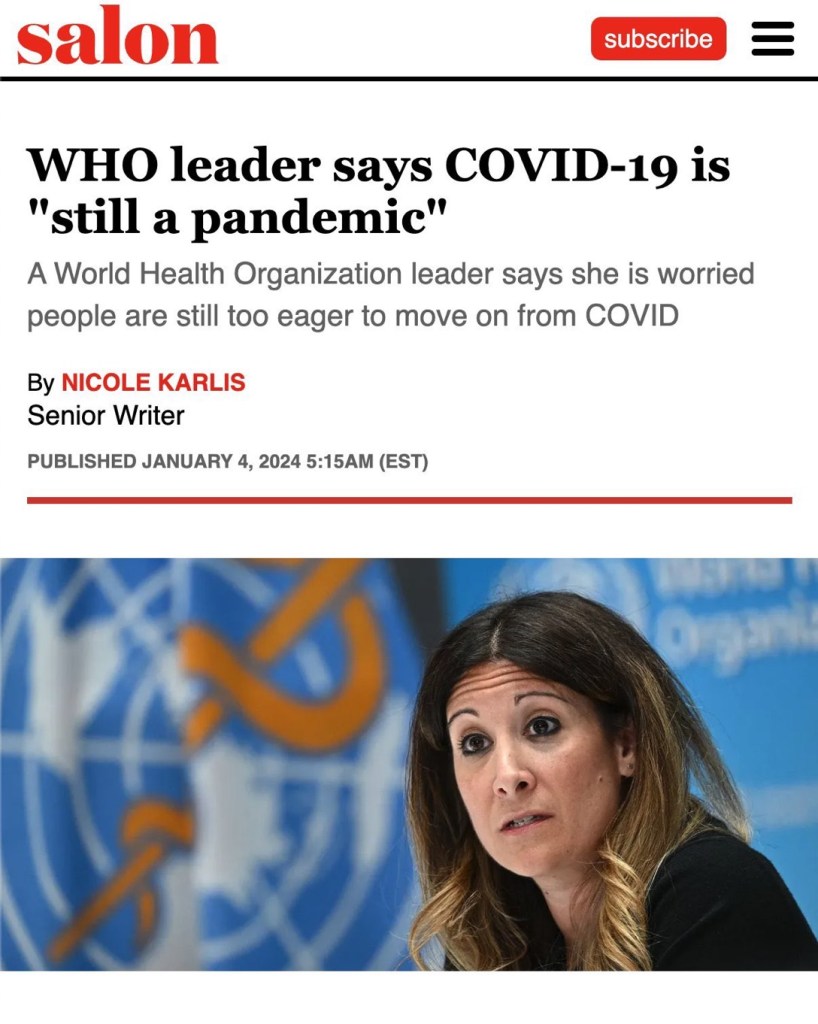
The WHO sounded a louder warning on 12 January. To summarise in case you can’t listen to the short clip embedded in the link:
“5 years from now,
10 years from now,
20 years from now,
what are we going to see in terms of CARDIAC impairment,
PULMONARY impairment,
NEUROLOGICAL impairment?
We still don’t know”
Maria Van Kerkhove, World Health Organisation (12 Jan 2024):
Of course no one in the UK is listening. The speech has been reported in parts of the US press that I have seen, but not in the UK.
What is Long Covid
Long Covid is difficult to pin down because than 200 symptoms have been identified with impacts of Covid-19 on multiple organ systems. As I have highlighted above and elsewhere, Covid can cause a number of very serious immediately life threatening conditions. But in terms of the most common symptoms that people experience the main ones as summarised in Alex Hahn 2024 are as follows. Many of these symptoms will also be familiar to sepsis survivors. Certainly, my husband still suffers from the first two listed five years plus on from sepsis:
- Fatigue – occurs because covid-19 disrupts the mitochondria – the energy processing unit of our cells. It also causes micro-clotting which can impair oxygen levels in the blood, and causes organ damage and immune dysfunction,
- Brain fog – This is characterised by difficulties with focus, memory, concentration, word retrieval, and mental clarity. Sufferers often find they can’t multi task. This occurs because Covid-19 can enter the central nervous system potentially causing damage directly or inflammation that affects brain function. Covid can lead to reduced oxygen levels in the blood and affect blood clotting which impacts on the flow of oxygen to the brain. Persistent fatigue can also impact cognitive function. The amount of research on the impact of Covid-19 on the brain is growing all the time. For example, recent research suggests that brain fog may be due to the blood -brain barriers becoming leaky during infection. And research published on 28 February 2024 showed a decline in IQ associated with having a Covid infection, though this research did not address the increasingly important question of the impact of multiple Covid infections on the brain. On the same day the Conversation published a short summary of some of the evidence on the impact of Covid-19 on the brain.
- Persistent cough – sufferers sometimes report a cough that persists for weeks or months – ‘the 100 day cough’. This is often caused by Inflammation and damage to the respiratory tract, heightened sensitivity of the airways or chronic infection (covid can reactivate latent infections and cause other infections due to weakened immune response), long term respiratory complications, or gastroesphageal reflux disease.
- Shortness of breath – this can occur after physical activity or even at rest. It could be due to inflammation, lung damage or ongoing immune system responses.
- POTS – Postural Orthostatic Tachycardia Syndrome – this condition is characterised by a group of symptoms primarily involving the autonomic nervous system, that occur when a person moves from lying down to a standing or upright position. Symptoms include fast heartbeat, dizziness, and headaches. Treatments aiming to manage the condition include increased fluid intake, increase salt intake and possibly drugs.
- Headaches and Vertigo – the exact mechanisms behind these symptoms in LC sufferers are not fully understood but might be related to inflammation, neurological effects of the virus or disruptions in the autonomic nervous system.
- Clotting and Vascular injury -Covid can damage the endothelium – the lining of the blood vessels and can infect the plaque formed in arteries. It therefore increases the risks of blood clots that can cause pulmonary embolisms, heart attacks and strokes. People are also at increased risk of venous thromboembolism, DVT, microvascular dysfunction and poor circulation.
- Cardiac Complications –palpitations, an abnormal awareness of the heartbeat, which can feel like a rapid pounding sensation in the chest are common features of LC. Also dizziness is common. Conditions reported include myocardial inflammation, abnormal heart rhythms or cardiomyopathy (weakening of the heart muscle). Anyone experiencing new cardiac symptoms after covid should seek medical attention.
- Dematological Complications – LC sufferers sometimes report complications such as rashes and hives, alopecia, chilblain like lesions.
- Kidney Injury – Covid-19 can cause acute kidney injury which often happens shortly after infection. This triggers and inflammatory response in the body leading to a heightened immune response. Covid can also cause blood clotting affecting the flow of blood to the kidneys. As well as immediate impacts Covid can cause less severe lingering impacts on the kidney which can lead to chronic kidney disease over time.
- Menstrual Changes – Covid-19 is reported as causing menstrual changes.
- Deafness and Tinnitus – These symptoms are commonly reported and people often report that their pre-existing symptoms have become worse after Covid-19. The exact reasons for this are still under investigation.
- Gastrointestinal Complications – are very common with Covid-19 ranging from nausea, vomiting, diarrhoea and altered sense of taste. In some cases Covid-19 has been found to be associated with abnormal liver functioning and a range of disorders including problems with the gallbladder and a recent study found that people who have had Covid more than once were twice as likely to experience pancreatic disease compared to those who had never had Covid.
- Neurological and Psychiatric Complications – people with LC often present with a diverse range of neurological and psychiatric symptoms including disruptive sleep patterns, nerve pain, anxiety and depression.
Researchers are getting closer to explaining this – for example in an excellent review by Trish Greenhalgh published in the Lancet.
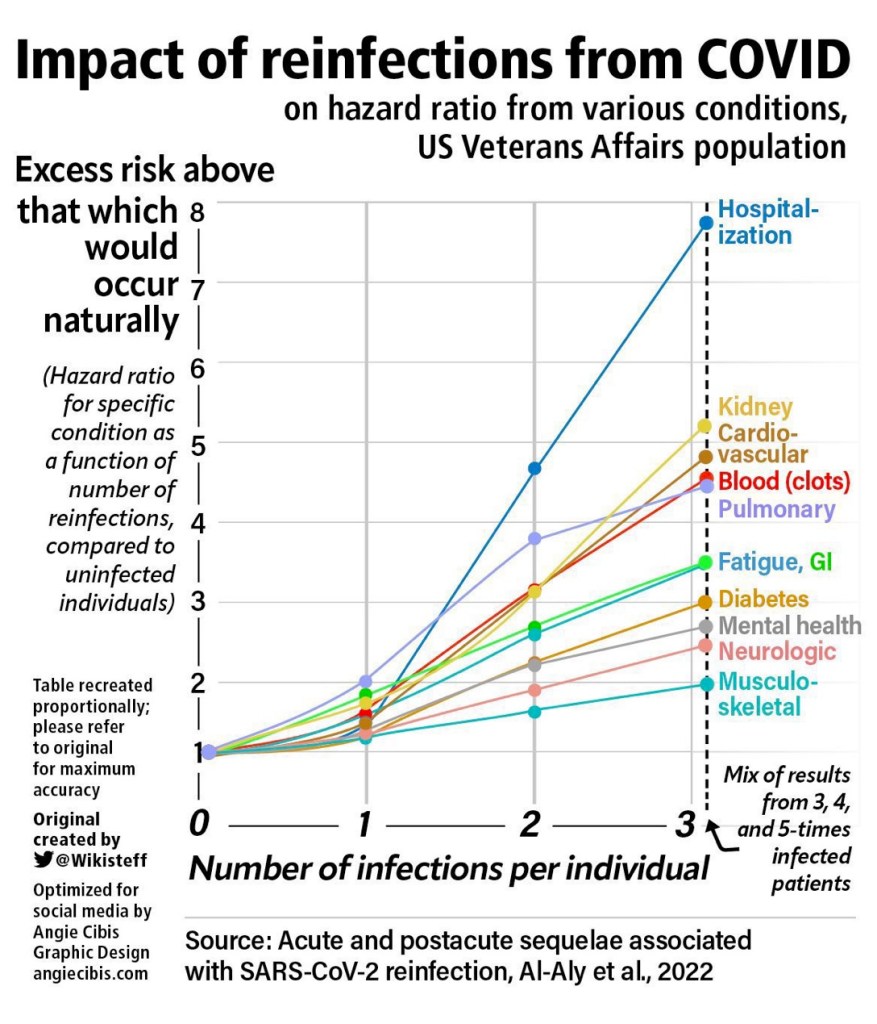
There is some evidence that the risks of LC increase the more infections you have had. This may be because underlying health conditions that people may not necessarily be aware of could put them at higher risk after each infection.
“For somebody who is already on the edge of developing diabetes and then gets COVID-19, that could damage the pancreas and the endocrine system enough to change things,”
See ref above covered in Time magazine review
There are also an increasing number of researchers who argue that the way in which Covid impacts on the immune system in some people means it responds differently to other viruses after reinfections:
‘But there is also growing evidence that in some people, getting COVID-19 the first time may compromise the immune response in a way that makes the body less likely to respond effectively the next time it sees the virus. That could leave certain organs and body systems, such as the brain, weaker for months after infection—and subsequent ones. “It’s the balance of these two opposing forces—the immune system learning from the past and knowing how to deal with a virus and do a better job the second and third time around, and the idea that a first encounter with a virus might alter the immune system in some way that it becomes less efficient—that could explain why some people get Long COVID,’
See Time magazine ref above
We are seeing an increase in illnesses that were previously regarded as defeated, including illnesses most commonly associated with the 19th century, including TB. It has been suggested that a possible cause of this is viral reactivation associated with Covid-19 attacking the immune system.
And research based on US veterans found the risks of hospitalisations and deaths increases each time you get Covid.
The Impact of Long Covid on the Lives of Sufferers
Long Covid will usually have a devastating impact on the lives of sufferers and a recent study concluded that sufferers found their symptoms were as bad as for stage 4 cancer. In a recent US Senate committee Bernie Saunders gives a powerful introduction to the subject. Danny Altman of Imperial College and other academics have worked tirelessly on the subject for nearly 4 years and are spearheading the UK search for solutions. In a recent TV interview he discusses some of the issues.
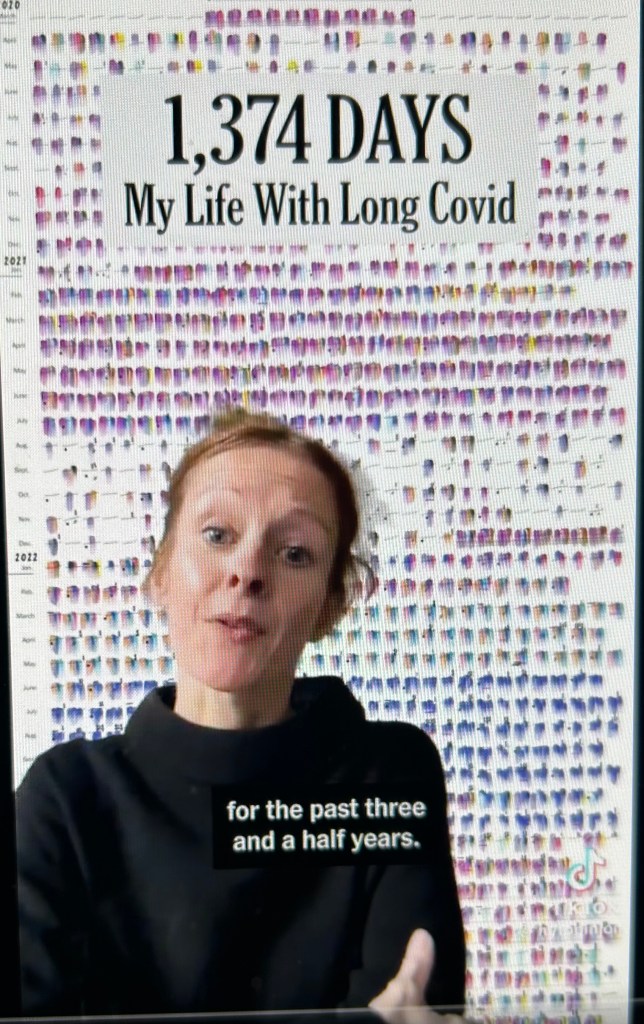
One of the problems is that sufferers often report more than one of the above symptoms at the same time and there are some heartbreaking stories published every day on social media sites. For example, the women in the photo above works in data visualisation in New York and has been charting her symptoms daily by a different colour code and this well illustrates the changing nature of the illnesses suffered and how this waxes and wanes.
From the UK Sam Williams has spoken up about the impact of LC on his life and from the US a women talks about the impacts of LC on her marriage.
How extensive is Long Covid in the UK?
As will be evident, LC presents itself in a diverse range of ways and often comes and goes and comes back over time. All estimates of the extent of LC are subject to errors of definition and measurement because some people will not link their symptoms to Covid and particularly for old people, symptoms will be blamed on ‘old age’. Numerous estimates are bounded about, including that there are 65 million sufferers worldwide. In the USA, for example, the number of people with Long Covid continues to rise. And in Spain it is estimated that two millions spaniards suffer from LC and only a small minority of these people can continue to work with no limitations.
In the UK the best source of information used to be the ONS Covid Infection Study. The estimates were based on one question which relied exclusively on people self defining whether they were suffering from LC or not. The last published estimate from Winter 2023 was that there were 1.9 million people suffering from LC in the UK, 41% of whom had been suffering with the condition for over 2 years.
The ONS infection survey was discontinued in March 2023 and we have had no data since then. However, the new ONS Winter Covid-19 Infection survey does contain a question on LC, although this data was never meant to be comparable with results from the more robust ONS infection survey.
The first report of the new survey was published just before Christmas 2023. Rather curiously the results of the question on LC were not included in the report and neither were the raw results published in the data tables. There are a number of possible explanations for this. It could be that ONS have not had the time to analyse all the data and have not prioritised the Q on LC. On the other hand, we know that the final achieved sample is biased towards older age groups and most likely those with an interest in the subject and we know that the results published on 21 December 2023 were subject to significant weighting, the details of which have not been published.It is possible that the raw results on LC showed a very significant proportion of people suffering from LC reflecting the nature of the achieved sample (people interested in the subject) than anything else. I can appreciate that ONS would not know how to begin to reweigh, if this was indeed the case.
The next Winter Infections survey is due to be published in January and we will need to wait to see whether it says anything about LC (April update – the data has never been published despite pressures to do so).
Update 26 April 2024
At long last the data on long covid from the ONS Winter Covid-19 infections survey has been published and summarised in a blog from me. It suggests that far from declining, the number of people suffering from Long Covid is growing and it is estimated that circa 2.3 million people in the UK are suffering with LC. Moreover, LC is most prevalent in the core middle aged groups of 45 – 64.
Who is more likely to get it
Anyone can get Long Covid, though as we note above, reinfections seem to be particularly associated with the onset of LC. There is a common belief that LC only occurs in the unvaccinated or in people who were hospitalised with Covid. This is not true – even people with initially mild symptoms can get LC. In fact, even though you are more likely to get LC if you were hospitalised, the vast majority of people with LC were not hospitalised because only a tiny proportion of Covid cases result in hospitalisation.
Recent evidence has neverthelessless tried to uncover who is most likely to get it. There are few surprises here:
- A history of allergies,
- signs of autonomic nervous system dysfunction,
- pre-existing immune system issues,
- chronic infections,
- diabetes,
- being slightly overweight,
- Cardio-vascular condition
- A pre-existing history of anxiety or depression,
- joint hypermobility (being “double-jointed” with pain and other symptoms).
- Those who have had multiple infections.
Public Attitudes to Long Covid
Whilst many people have sympathy for people like Derek Draper who contracted Covid early in the pandemic and were clearly ill, this is not universal and even in the Draper case some people have gone as far as suggesting that problems were caused by the Covid vaccine (clearly nonsense – vaccines only began to be rolled out at the end of 2020) or that it was all exaggerated for the benefit of Kate Garraway’s career (again – nonsense). Indeed, the author Michael Rosen, who suffered Covid in 2020 and was in the same ICU unit as Derek, has refuted the outlandish claims being made.
This is extreme but many LC sufferers will recognise the problem of people changing the subject if they try to talk about their LC problems. Indeed, this is why there is such a strong affinity between the Long Covid community and clinically vulnerable families. We all face the same, or very similar problems and if this continues it is less likely that solutions to our problems will be found. But most people want to move on from the pandemic, don’t want to acknowledge it and sometimes blank people – see my forthcoming blog ‘What is Wrong with People’.
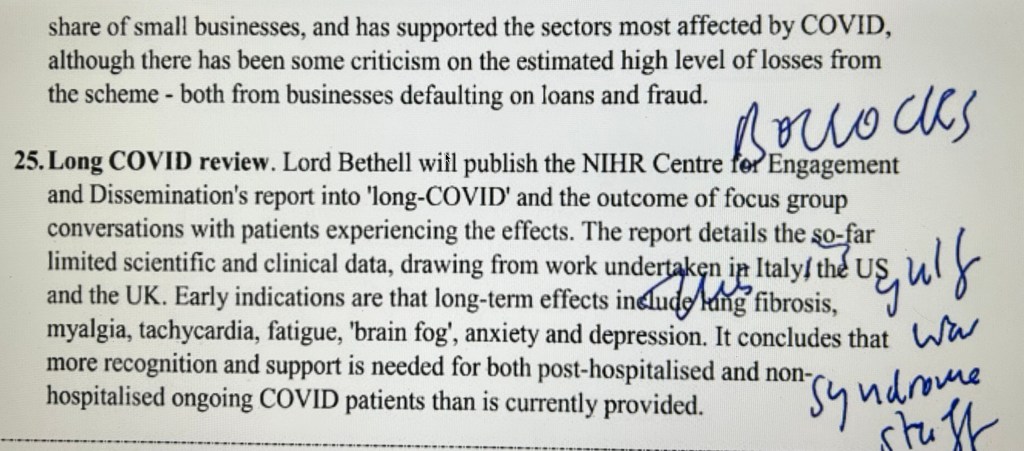
Some people will also be influenced by the media and people like Boris Johnson who have tried to deny that Long Covid exists. Indeed, the Covid Inquiry has uncovered the true horror of Johnson’s attitude whilst he was PM and succinctly captured in the photo below.
There is of course nothing new here. People suffering from ME will recognise it as they are often accused of being malingerers or ‘it is all in the head’. Even sepsis survivors will recognise it because sepsis can have a very long hangover following the original sepsis.
Part of the explanation for these attitudes and behaviours may also be to do with the fact that there is no cure for these illnesses, including Long Covid. People find it easier to talk about tangible illnesses such as cancer or heart disease because there is normally a clear diagnosis and treatment route, and the treatment usually has side effects and may not always work. This is understood. Talking about vague muscle aches, brain fog and fatigue is more difficult.
Is there a cure?
The short answer to this question is no. There are a number of ways of trying to alleviate the symptoms as discussed in the concluding comments below, but they are not cures as such. Please speak to your medical practitioner as many of the symptoms of LC such as cardiology problems will need to be addressed.
I am aware that people are having enormous problems in accessing help or are having assistance withdrawn after a certain period. There are numerous examples of people being failed, but change may be in the air. There is currently a case in the Scottish courts brought by a mother whose daughter suffers from long Covid and has been failed by the Grampian Health Authority. This is getting a great deal of publicity in Scotland and if it is successful could lead to many other cases across the UK and act as a lever to force the NHS to do better.
There are a number of research projects underway trying to find a cure or cures for LC. Part of this is obviously research to pinpoint the causes of LC, including recent research based on the UK biobank which found significant serum protein changes in LC patients. Also, new research is aiming to develop a blood test which would aim diagnosis and treatment. I will continue to document some of these here.

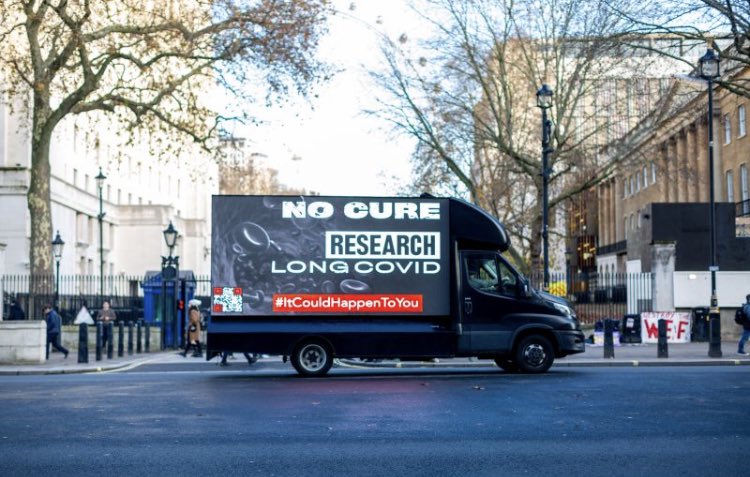
One of the problems is that the world seems to have lost interest and this is reflected in the amount of money being spent on research into LC. It is for example, difficult to get the Research Councils in Britain to put significant resources into finding a cure. However, a recent ray of hope was a debate held in the US senate which resulted in a call for more research on LC. This received quite a lot of media coverage in the US at least from what I can see. This scientist, Dr. Ziyad Al-Aly, who gave evidence to the hearing, identifies a public desire to move on from the pandemic as a key barrier to solving LC. This is discussed further, along with tips for avoiding and treating LC in a paper from the John Snow project.
Concluding Comments
There is no consensus on how long LC lasts for but it is clear that in most cases it will be for far longer than for other viruses such as flu. Some people will probably never recover from LC if evidence from the SARs epidemic experienced in the Far East just after the turn of the century remains true for the current pandemic, but others will recover after a few months or years. However, LC is often associated with peaks and troughs – you think you have recovered and then you start to go downhill again, often following exercise.
The advice to date is that your chances of recovery will be greater if you prioritise your needs and wellbeing. I appreciate that it is not always easy, but changing work patterns, and giving up stressful jobs if you can, and generally taking the pressure off yourself are all thought to be beneficial as rest and sleep are very important. Take light exercise when you can but don’t push it and try to eat well. Also consider joining an on-line community of fellow sufferers can be very beneficial in terms of information exchange and support. Also keep in touch with your medical professional but find one who is supportive and not dismissive of your condition and symptoms. And speak out about your experiences if you can as it is only by doing this we can keep the problem in the public eye. This young lady from the USA seems to know more about Covid and its impacts than most politicians, has a large following on tick Tok and has skills in how to explain it all to young people. And Lisa from Wigan is a very good knowledgable communicator and could be even more impactful with better technology.
Finally, and in common with the approach taken by many clinically vulnerable people, remove people from your circle of contacts if they try to minimise your problems and gaslight or abuse you – they are not friends! You don’t need the added stress as you need to focus on recovery and surround yourself with people who will support this.
Update 5 February
Most of the British media are still in the main in denial about Long Covid. For example, an article appeared in today’s Times newspaper about the very significant rise in long term sick absence in the civil service – especially among those working in front line roles. Whilst the article talked about workplace stress and workloads following the pandemic (sic), the idea that covid infections and Long Covid might be part of the explanation was completely missing from the article.
However, there have been a few glimmers of light, including yesterday’s BBC Scotland’s Sunday Show which featured consultant cardiologist, Rae Duncan who makes the following points:
- if we think of Covid in terms of the acute phase we are talking about the tip of the iceberg – but the bulk of the iceberg is below the surface.
- Moreover, the more times you get infected, the higher your risk of getting long Covid.
- And everyone is at risk. Many of her LC patients were previously young, fit and healthy.
- She goes on to explain that this winter has been devastating for some of her patients as so many have been reinfected with Covid.
- She calls for our government to start listening to the WHO advice. If we don’t get a handle on high covid transmission rates, hundreds of millions are going to require longer term care.
- She explains how studies have repeatedly shown that cleaning the air (by improving ventilation and filtration) can significantly reduce Covid outbreaks in schools, for example.
- The current situation is already costing the UK economy billions of pounds per year and it will only get worse unless we act and learn to live safely with Covid.
None of this from Rae Duncan will be new to readers but it is very interesting that BBC Scotland ran the story and the interviewer was so well informed in his questioning.
On an optimistic note – maybe there is hope!

 Living on Plague Island
Leave a comment