
A previous blog ‘The new winter infection survey: light at the end of the tunnel” discussed proposals for a new slimmed down, more limited version of the previous infections survey in order to track the levels of Covid this winter. According to the ONS statistical release calendar, the first results were due to be published on 7 December, but alas it was not to be and we are still largely in the dark as Christmas approaches.
The first sign of potential trouble came late in the day on 5 December, the day before the former PM, Boris Johnson was due to take the stand at the Covid Inquiry. The UK Health and Security Agency requested and was granted exceptional pre-release access to the survey results/report.
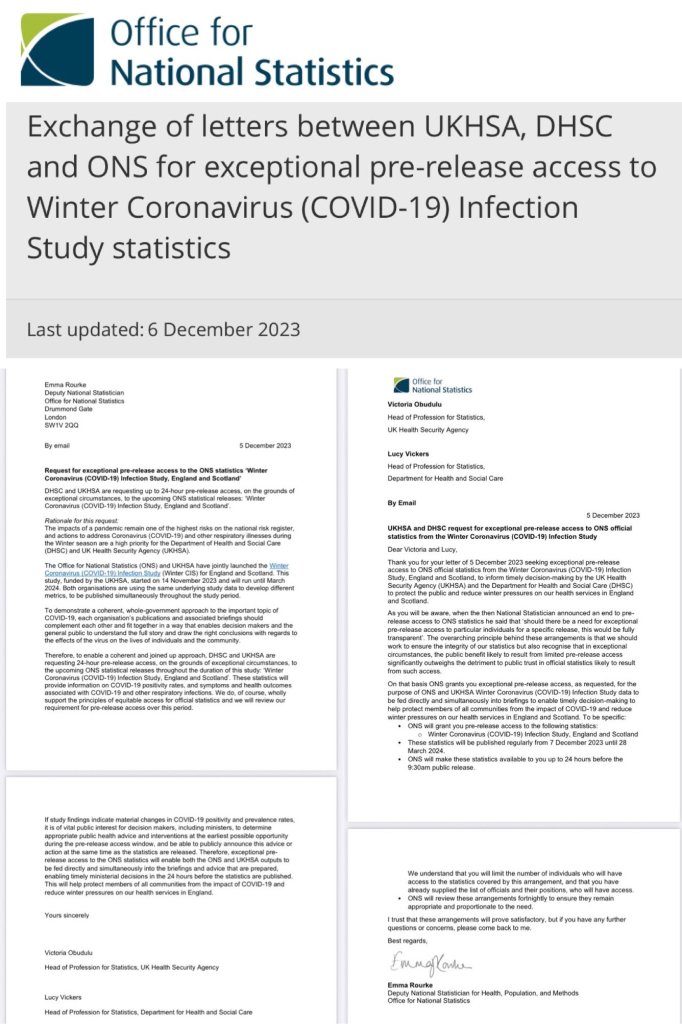
The next day it emerged that ONS were no longer going to publish anything like the full first results of the survey which were due to give an indication of the prevalence of Covid infections. The statement from ONS (reproduced below) states that they will appear just before Christmas on 21 December, but there are also rumours that the full report will actually be delayed until the snowdrops are starting to come up in mid January.

The ONS did release some raw data on the scheduled date of 7 December. This explained that the report was being delayed ‘to allow more time to develop appropriately assured results’.
What we have at present therefore is raw data on some, not all of the questions in the survey; there is no information on responses to the question on Long Covid, for example. We have no information on the response rate, no statement on achieved sample bias (this has always been a key worry given there is no incentive to take part) or the quality of responses to different questions. In my assessment, based on extensive experience of conducting and commissioning surveys, is it is potentially meaningless and it is better to wait to see what appears on 21 December before spending significant time analysing the data.
Nevertheless, a number of people have looked at the data. Christina Pagel has produced a brief note linking the picture from the raw data to other, albeit, inadequate official data sources. This suggests that the UK is coming out of a trough and that the number of Covid cases is starting to climb and is increasing fastest in 18 – 34 year olds.
It is pertinent to note that the 18 – 34 year old group is significantly underrepresented in the raw data suggesting a very significant bias in the achieved sample (see graph below). 3% of the achieved sample was in this age group whereas we would expect these young adults to make up 22% of the sample.

Taking everything into account, including that LFTs (lateral flow tests) only capture about 70% of Covid infections, Pagel and others say that it is probable that slightly under 2% of the population had covid at the end of November. My assessment is that the percentage will be higher than this because of biases within the achieved sample. I would guess at between 2 and 2.5%.
As noted by Christina, the rate of infection is likely to rise as we approach Christmas. But we don’t know by how much which makes it increasingly crucial to have reliable, up to date data.
The JN.1 variant has recently been designated by UKHSA is known to be more transmissible, more immune evasive and harder to throw off than recent Covid strains. The later may be because it has elements of the previous alpha and beta variants.
This JN.1 variant is said to be causing particular problems in the US at present following on from the US Thanksgiving weekend. It certainly seems from the map below that covid is continuing to give but, from analysis of press reports, the US population are not thankful for it!

Meanwhile in Europe some countries are experiencing an unprecedented growth in Covid infections. For example, wastewater analysis from the Netherlands shows levels of Covid to be higher than they have ever been.

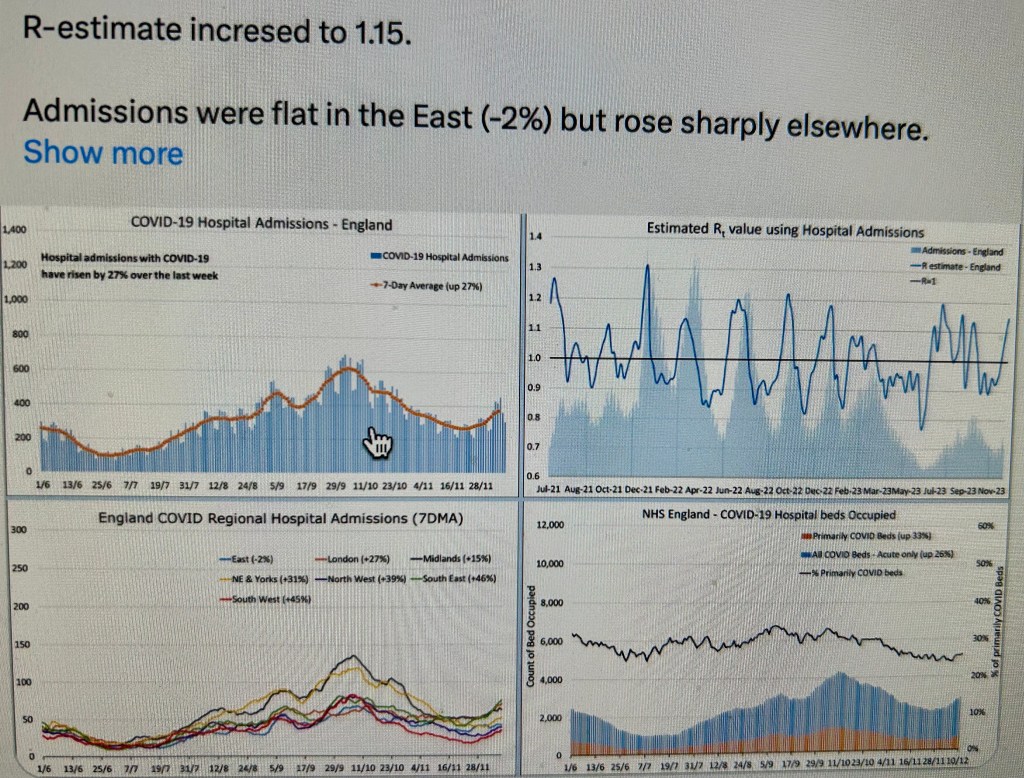
In the UK the number of hospital admissions due to Covid jumped by 27% in the week ending 10 December.
We urgently need the results from the ONS winter Covid-19 infections survey and can only hope that they appear, as scheduled on 21 December.
Concluding Comments
The UK is therefore heading towards the Christmas celebrations with Covid still making its presence felt along with all the long term implications for economic activity, illness, death and misery. It is frustrating to me and so many others that it could have been very different.
For clinically vulnerable families and others who want to stay safe this holiday season I would advise you to read my blog on Avoiding Covid. In particular, ensure adequate ventilation of indoor spaces where people will be gathering and think about whether you really want to have an indoor gathering which will involve people sitting down in close proximity for a long period of time – for example, why not an on-going help yourself buffet rather than a sit down lunch? Think about social distancing.
Or why not consider the recent advice from the British Heart Foundation for those with a heart condition, and consider whether an outdoor walk with friends, taking flasks of hot drinks with you might be more enjoyable?
I also know some people who are thinking up innovative ways of protecting themselves and also getting people out in the open air on Christmas Day – for example, find out if there might be anything of interest in the garden or the vicinity of the family home, such as an underground tunnel or shelter and lead an expedition outside to discover it!

 Living on Plague Island
Leave a comment